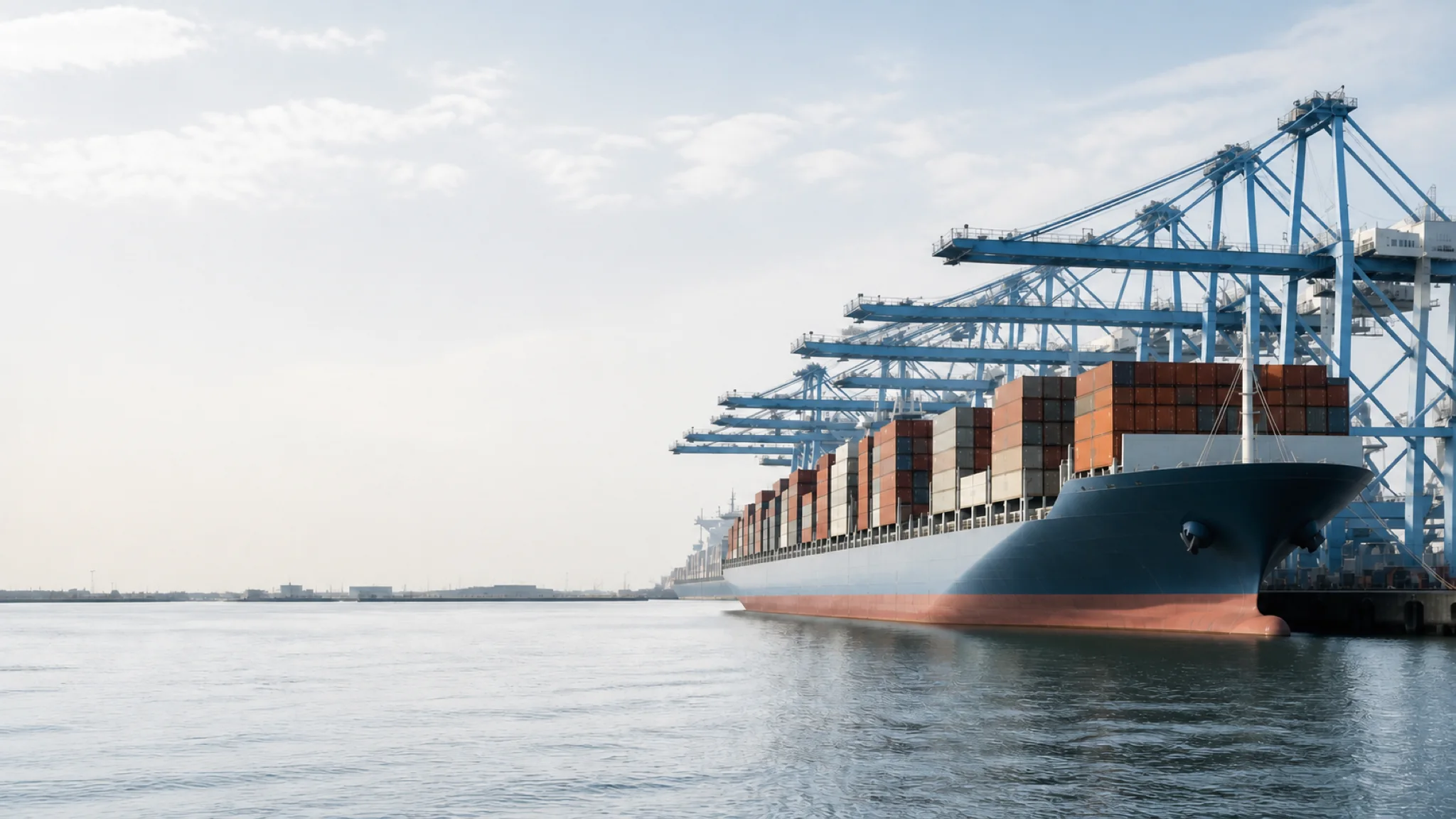
The International Maritime Organization published a new statement on 28 August 2026 marking six months since the Middle East conflict began on 28 February. Its assessment is direct: the situation in the Strait of Hormuz remains unresolved. IMO says up to 400 ships carrying around 6,000 seafarers have been unable to depart safely, while disruption continues to affect fuel, fertilizer and other commodity supply chains. The same update records at least 70 verified attacks on international shipping and 19 seafarer deaths since the conflict began.
Those figures are not a prediction of future freight rates or ingredient availability. They are evidence that route risk is still operational, not theoretical. IMO's dedicated Middle East information page, updated with transit information and an incident list during the final week of August, says the situation is rapidly evolving.
Sourced facts: the disruption remains unresolved
IMO reports that an evacuation framework moved 136 vessels and an estimated 2,900 seafarers over four days in June, but that the plan is currently paused.
The incident record gives buyers another reason to avoid treating a nominal route as a confirmed movement plan. IMO's list, updated on 26 August, includes multiple incidents during August and states that 70 incidents and 19 fatalities had been confirmed by that date.
Agrifood exposure extends beyond cargoes that physically originate in the Gulf. FAO's 2026 Middle East conflict hub identifies energy and fertilizer trade as transmission channels into agricultural production and food security. Its policy analysis also describes government responses that have prioritised logistical resilience, financial risk management, alternative inland corridors and diversification of supply.
Commercial interpretation: buy a route, not only a product
For a feed-ingredient buyer, the practical issue is not whether every shipment touches Hormuz. It is whether the seller's offer depends on a port, vessel, feeder connection, fuel market or inland corridor exposed to the wider disruption. A product can be available at plant while the proposed export route is not realistically executable.
Before fixing a container or bulk lot, buyers should therefore request a route statement alongside the specification and commercial offer. It should identify the proposed loading point, nearest export port, expected transhipment points, carrier or service where known, container availability, current loading lead time and the date on which the route was last reconfirmed. An old routing assumption should not be treated as current evidence.
Offer validity also deserves more discipline. A long validity period can create false comfort when vessel acceptance, insurance conditions, surcharges or equipment availability may change faster than the product price. Commercial terms should distinguish product availability from freight availability and state which elements remain subject to carrier confirmation. That is not a forecast; it is a clearer allocation of execution risk.
Documentation planning should happen before booking. Buyers should confirm who will provide the commercial invoice, packing list, certificate of origin, health or veterinary certificate where applicable, analysis certificate and any destination-specific declarations. If a route changes after booking, the team should check whether document wording, consignee instructions, certificate endorsements or cut-off times also change.
Contingency planning should be specific rather than generic. A workable fallback names an alternative loading port, service or origin that has already been checked for product eligibility, plant approval, document acceptance and destination rules. Simply writing 'alternative route available' in a contract does not establish that the alternative can carry the same material under the same compliance conditions.
A five-gate pre-shipment check
Procurement teams can translate the current disruption into five release gates:
- Product gate: specification, species or raw-material origin, batch availability and production timing are confirmed.
- Compliance gate: producer approval, destination eligibility and required health, origin and analysis documents are confirmed.
- Route gate: loading port, service, equipment, transhipment and realistic lead time have been reconfirmed recently.
- Commercial gate: Incoterm, freight validity, surcharge treatment, payment trigger and cancellation responsibilities are explicit.
- Contingency gate: at least one credible fallback has been assessed, or the buyer has consciously accepted that no fallback exists.
Apply the gates across ingredient categories
These checks apply across animal proteins, marine ingredients, plant proteins and feed materials. Their purpose is not to delay purchasing. They prevent a commercially attractive offer from advancing further than its logistics and documentation can support.