Archived analysis. Original briefing date: 2026-09-08. Archive edition published 20 November 2026. Facts, observations and forecasts relate to their stated dates, not current quotations or shipment approvals.
Key fact: FAO inaugurated its Adriatic technical unit in Split on 4 September 2026 to support fisheries cooperation across six countries, not to announce saleable ingredient volume.
Archive edition prepared 20 November 2026 from the briefing dated 8 September 2026. The institutional development was FAO's 4 September inauguration in Split. It did not announce additional commercial marine-ingredient tonnage, an Adriatic source for GT products or new stock.
The September institutional announcement
For feed-ingredient buyers, a recurring marine-protein contract should begin with a question beyond the next available container: what supports the next shipment, and the one after that? The September inauguration of a fisheries institution in the Adriatic provided a reason to examine that question. The useful commercial response was to investigate supply continuity, rather than treat an institutional announcement as evidence of immediate product availability.
Sourced facts: a permanent base for regional cooperation
On 4 September 2026, FAO inaugurated the General Fisheries Commission for the Mediterranean's Adriatic Sea Technical Unit in Split, Croatia. The announcement was published that same day. FAO said the unit would support scientific cooperation, implementation of fisheries management measures and coordination among Albania, Bosnia and Herzegovina, Croatia, Italy, Montenegro and Slovenia. It would also contribute to the MedSea4Fish capacity-development programme. FAO announcement
The wider GFCM 2030 Strategy combines productive fisheries, action against illegal fishing, sustainable aquaculture, livelihoods and technical cooperation. Its subregional approach recognises that local needs matter within a shared regional framework. These are management and development objectives, not commercial guarantees for a particular ingredient or shipment. GFCM 2030 Strategy
There is also an established processing connection. FAO's technical explanation, published on 25 April 2021, describes fishmeal and fish oil production from whole fish, trimmings and other processing by-products. It highlights the importance of careful handling to preserve quality and the opportunity to recover useful materials from processing. This is background evidence about production routes, not a new estimate of Adriatic supply. FAO by-product utilisation guidance
Commercial interpretation: distinguish three kinds of availability
GT Nutritions' interpretation is that a supply review should separate biological resources, processing throughput and commercially available finished material. The following recommendations are procurement judgements, not new requirements announced by FAO.
First, ask what raw-material stream supports the offer. Request the species, capture or aquaculture origin, source area and whether production uses whole fish, processing by-products or a documented mixture. Do not use the location of the final factory as a substitute for understanding where its inputs originate. For a recurring contract, ask whether those inputs remain consistent across the intended delivery months.
Second, request a practical production calendar. Ask which months are supported by finished stock, which depend on expected processing, and which remain provisional. A supplier should be able to distinguish an available batch from an indicative future allocation. Record that distinction in the purchasing file rather than presenting every quoted month as equally secure.
Third, establish what can actually be dispatched. Request the quantity available for your account, the earliest loading window, packaging, transport assumptions and the conditions under which an allocation becomes firm. Treat commercial confirmation as a separate step from receiving a specification sheet. A suitable sample should initiate qualification; it should not be recorded as proof of a continuing shipment programme.
Turn the review into a usable supply schedule
For each proposed monthly shipment, create one line in the procurement register covering the contracted grade, quantity, production basis, loading period, document status and responsible contact. Add a clear status such as indicative, technically approved or commercially confirmed. This gives procurement and operations a common view of what still needs evidence.
Ask the technical team to define the acceptance criteria before comparing offers. For meal, request the agreed nutritional and quality parameters, analytical methods and a representative certificate of analysis. For oil, request the contracted fatty-acid and oxidation specifications, storage guidance and shelf-life conditions. The purpose is to establish a comparable decision basis, not to assume that every marine material serves the same formulation role.
Where a supply programme depends on by-products, ask how the processor records the incoming material and handles changes in its composition. Request a notification procedure for changes in species, source stream or processing location. Decide in advance which changes require technical reapproval and which can be handled through normal batch documentation. This turns a general continuity discussion into a manageable operating agreement.
Apply the same discipline when considering alternatives. GT's salmon meal and salmon oil catalogue entries provide starting points for product enquiries, while corn gluten meal may be considered in a separate protein-formulation review. These are not interchangeable products, and their inclusion does not imply Adriatic origin or newly available stock. Use the selected specification, intended application and technical assessment to decide relevance. GT Nutritions catalogue
The next supplier conversation should therefore produce something concrete: a documented supply calendar with qualified grades, realistic dispatch windows and unresolved questions assigned to an owner. Follow regional fisheries developments as context, but base purchasing commitments on evidence that reaches the actual batch and delivery plan. That is the practical distinction between monitoring a promising development and having material ready for the feed mill.
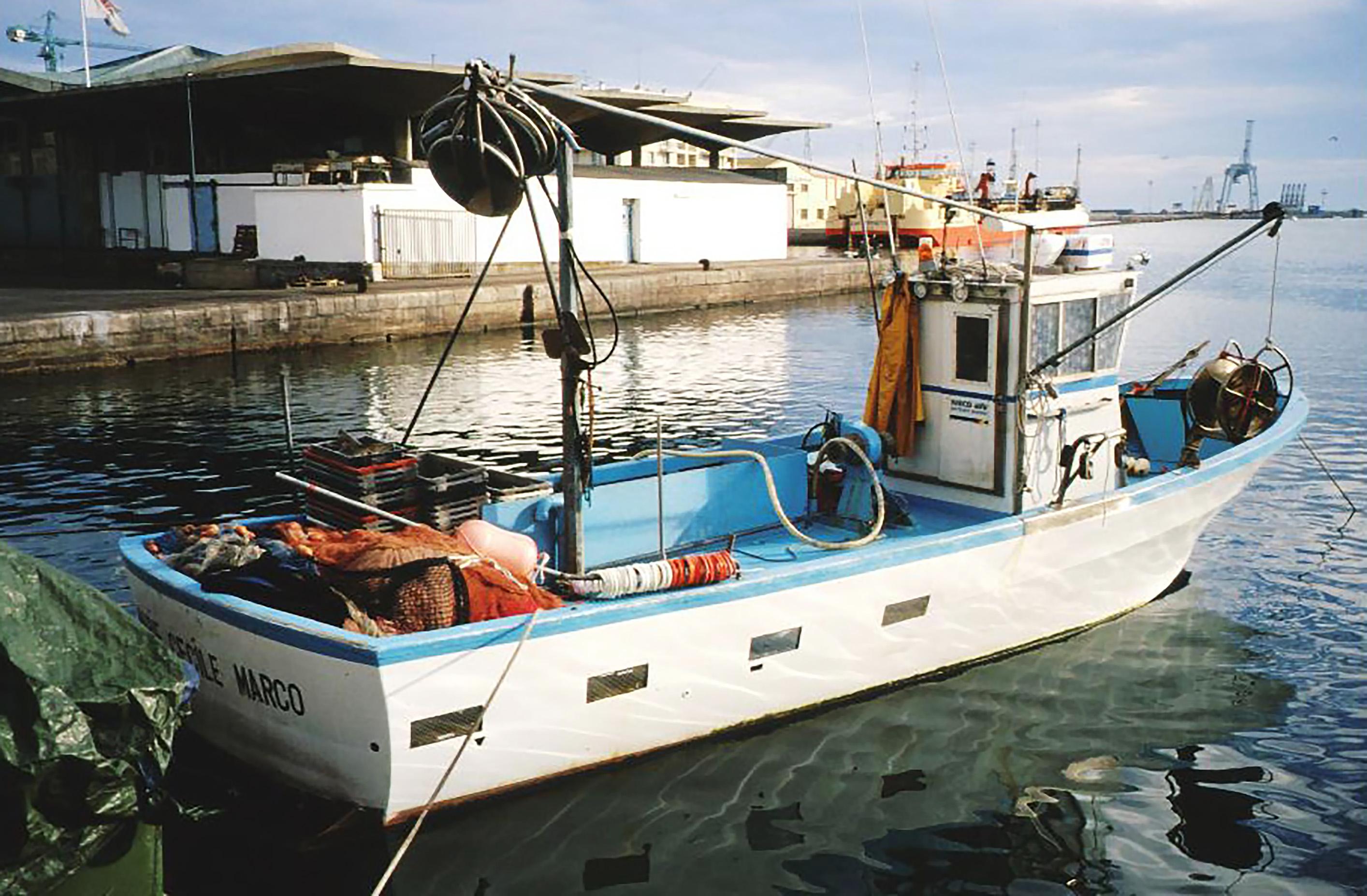
Archive photograph: a Mediterranean purse seiner. Photo: Alain Guillou and Isabelle Cheret / Ifremer, via Wikimedia Commons, CC BY 4.0. Original photograph unchanged; CSS display crop only, no AI editing. Illustrative only: not a GT supplier, a Peru or Baltic consignment, or evidence of a current fishing authorisation or endorsement.