Research reference date: 12 November 2026. Published 20 November 2026. Market observations refer to the periods identified below, not a current quotation or consignment approval.
Key fact: EFSA published its updated Alternaria opinion on 11 November 2026, following adoption on 30 September. Its accompanying news summary says more evidence is needed for most animal species and that health concerns from tenuazonic acid exposure cannot be excluded for broilers and laying hens. These are assessment findings, not a lot-specific rejection or a new contractual limit. Scientific opinion, EFSA news.
A new assessment, not a universal verdict
On 11 November, EFSA published an updated assessment of eight Alternaria toxins in food and feed. The scientific opinion was adopted on 30 September 2026: publication is the new development, not a claim that the scientific work happened yesterday. It updates the authority's 2011 opinion. The journal version lists 13 November and records the earlier EFSA website publication. EFSA scientific opinion.
EFSA's news summary says animal-health evidence remains insufficient for most species. It reports that alternariol and alternariol monomethyl ether are unlikely to pose a concern for broilers, while concerns from tenuazonic acid cannot be excluded for broilers and laying hens. Those distinctions matter: a conclusion about one toxin and animal group should not become a general assurance for every feed application. EFSA news.
The wider context is familiar. EFSA explains that mycotoxins are produced by fungi and can enter the food chain through crop infection before or after harvest. Its general overview describes agricultural, storage and processing practices as part of keeping contamination low. EFSA mycotoxins overview.
Commercial interpretation: ask what was measured
The following is GT Nutritions' procurement recommendation, not a new legal limit, a veterinary diagnosis or evidence that a particular consignment is contaminated.
Start with the certificate rather than the headline. Ask the supplier to identify the individual analytes included in its reported mycotoxin panel. Where Alternaria is relevant to the quality review, ask whether those analytes were actually measured. A general statement about mycotoxin compliance should not replace an explicit account of the panel's scope.
Keep three outcomes separate in the purchasing file: tested with a reported result, tested below the stated reporting limit, and not tested. Do not convert the last category into a zero. Ask the laboratory to explain the reporting terminology and any qualification attached to the result before the commercial team interprets it.
Connect the result to the intended feed use
Record the intended species, production stage and proposed application alongside the ingredient specification. Send that information to the buyer's nutrition or feed-safety specialist when requesting a review. The commercial team's role is to present an identifiable proposal, not to infer a safe inclusion rate from a short news release.
If the customer changes the proposed use, reopen the review. A qualification made for one formulation should remain attached to that formulation rather than travelling with the product name as an unrestricted approval. Document the specialist's decision and its scope so colleagues can distinguish an accepted use from an unanswered question.
Make the lot link visible
Ask for the lot identifier, sampling date, laboratory report number and the connection between the sample and the goods offered. If a supplier provides a historical result, label it as background evidence rather than silently presenting it as the current consignment's result. Agree what evidence must be available before loading and who is responsible for supplying it.
For purchases split between deliveries, decide how the documentation will follow each shipment. Keep the commercial order, loading record and analytical report connected. When the relationship between a report and a delivery is unclear, raise a specific clarification request instead of attaching an unqualified compliance statement to the invoice.
Agree an escalation route before release
Use a short decision record: what remains uncertain, who will assess it, what further evidence is requested and whether shipment release is pending. Give unresolved questions an owner and deadline. This makes a supplier discussion more productive than a broad demand for an assurance that every possible hazard is absent.
Do not invent an acceptance threshold from the assessment summary. Ask qualified staff to establish the applicable legal and contractual requirements for the ingredient, destination and intended use. Where the parties agree additional testing or a hold point, put those terms in the order before transport is committed. This article sets no numerical release criterion.
Improve the evidence without overstating the risk
The useful response is a targeted review, not an unsupported claim that an entire origin, crop or supplier class is unsafe. Ask which open questions affect the actual offer and what evidence would resolve them. Keep scientific uncertainty visible without turning it into a prediction of animal harm or commercial loss.
A clear test scope, an identifiable lot and a documented application review give buyers a better basis for discussion. The objective is not a longer certificate bundle. It is a purchasing decision in which the team can see what has been checked, what has not and who can authorise the next step.
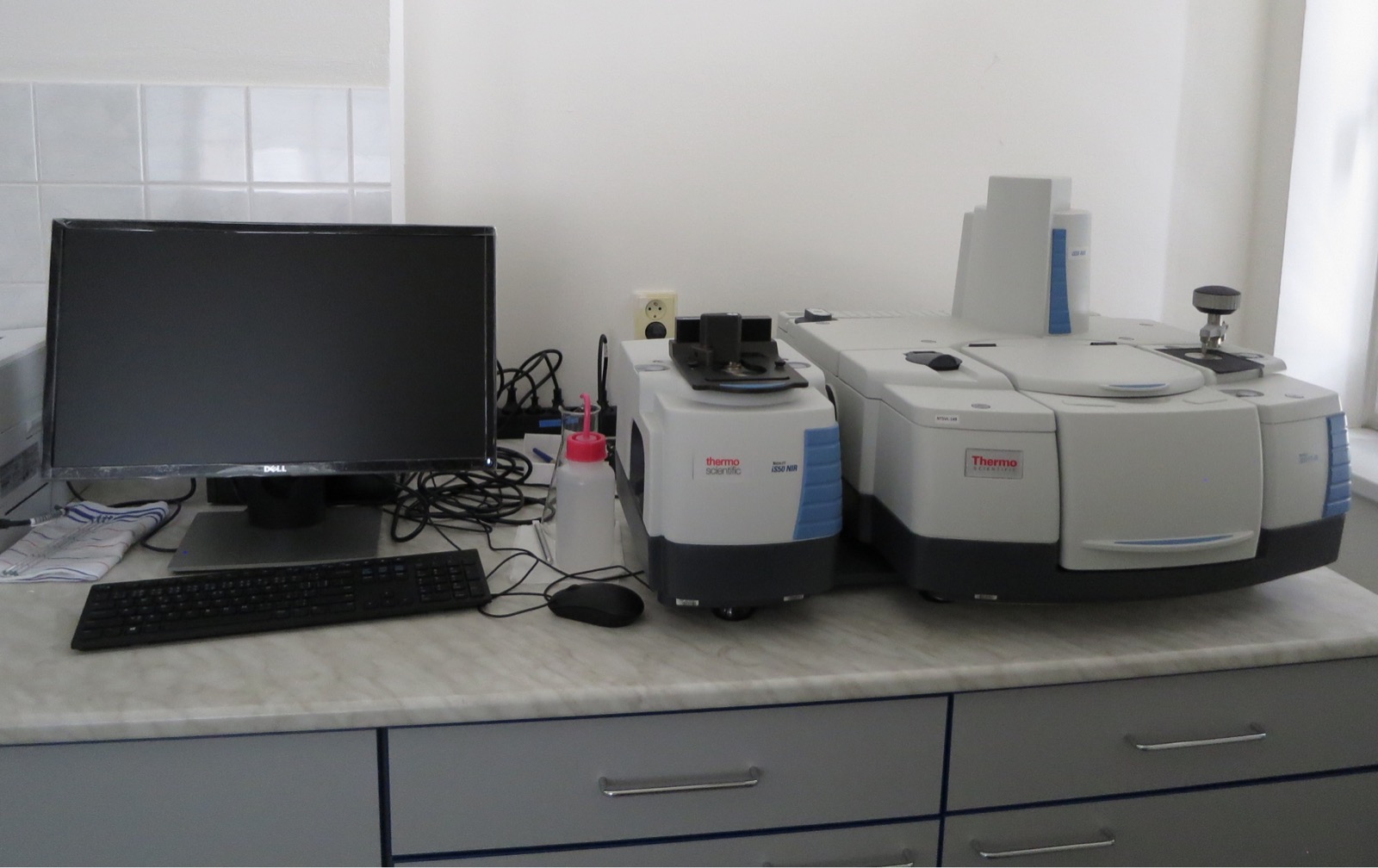
Archive photograph: infrared equipment in a Czech food-inspection laboratory, 8 January 2021. Photo: Sarka Na kopci / Wikimedia Commons. Image licensed under CC BY-SA 4.0. Resized and converted to JPEG; the layout crops the display. No generated or retouched content. Illustrative laboratory archive; not a test of a GT consignment.