Research reference date: 19 November 2026. Published 20 November 2026. Market observations refer to the periods identified below, not a current quotation or consignment approval.
Key fact: WOAH's 18 November statement calls for animal health and Veterinary Services to be integrated into climate action. It highlights risks to surveillance and essential services as well as to animals themselves. This is a policy call, not a new shipment restriction. WOAH statement.
Climate resilience includes the veterinary system
In a statement published on 18 November 2026 during COP31, the World Organisation for Animal Health calls for animal health and Veterinary Services to be recognised within climate action. WOAH explains that extreme weather can damage veterinary infrastructure, while changes in temperature and rainfall can affect disease vectors and the populations exposed to them. It advocates combining animal-health surveillance with weather and environmental information. WOAH statement.
For a rendered-protein buyer, the relevant question is broader than whether a truck can reach the loading point. A supply review should also ask whether the proposed source can maintain the evidence and official services needed for the intended shipment. That is a procurement interpretation of the statement, not a prediction of disruption at any particular producer.
Commercial interpretation for recurring protein purchases
Start with the actual supply arrangement. Identify the producing establishment, raw-material species and sourcing area supporting the proposed meal. Ask which parts of that arrangement are fixed and which may change if the supplier encounters a local interruption. Keep those answers beside the contracted specification rather than in a separate general sustainability questionnaire.
Ask how the supplier would notify the buyer if an interruption affected production, testing or dispatch. Request a named operational contact and a realistic sequence for confirming the next available lot. Distinguish a recovery plan from a firm commitment to load on the original date.
Where alternative sourcing is proposed, establish whether it means another establishment, a different raw-material stream or only another transport route. Each requires a different purchasing decision. Avoid accepting the phrase equivalent supply without identifying what has changed and which approvals must be revisited.
Use disease information without turning it into a trade verdict
WOAH's World Animal Health Information System, WAHIS, provides access to official animal-health information, including an early-warning system and periodic monitoring reports. Its public interface covers listed and emerging diseases in domestic animals and wildlife. WOAH WAHIS overview.
Use that information to frame a focused question for the exporter or responsible authority. Retain the disease, affected location, reporting date and source link. Ask whether the notification changes any condition relevant to the particular species, processed product, establishment or destination under consideration.
Do not use the absence of a retrieved notification as a guarantee of unrestricted access. Equally, do not convert a notification elsewhere in a country into an unsupported ban on every rendered ingredient from that origin. Keep the public disease report and the applicable import decision as separate evidence.
Keep geography and recognition precise
WOAH's zoning guidance distinguishes geographically defined animal populations from compartments defined primarily through management and biosecurity practices. It also describes a process through which trading partners may recognise such populations. WOAH Terrestrial Code, Chapter 4.4.
For the commercial file, request the precise geographic and establishment information needed by the destination authority. If an exporter relies on a zone or compartment, obtain the relevant recognition and conditions rather than substituting a country name or a supplier assurance. Have the responsible importer or competent authority confirm applicability to the intended movement.
Keep the processed nature of the material explicit. Do not assume that a rule concerning live animals automatically describes the treatment of a rendered meal, or that processing automatically removes every restriction. The product and destination assessment must address the actual consignment.
Date each eligibility confirmation and retain the reference supporting it. If the loading window moves or the source changes, ask whether that confirmation still applies. An approval obtained for the original proposal should not silently become the evidence for a materially different shipment.
Agree decisions before a contingency is needed
Set practical review triggers in the order record. Examples to negotiate include a change of establishment, an official notice relevant to the source, interruption of required testing, or inability to confirm certification before dispatch. Assign the person responsible for checking each trigger and the evidence needed to resolve it.
For a proposed replacement lot, refresh technical approval and commercial terms together. Ask the technical team to assess the new specification and lot analysis. Ask the logistics team to confirm the revised loading and receiving plan. Keep any customer approval requirement visible before the supplier treats the replacement as accepted.
Maintain a short decision record: continue as agreed, hold pending evidence, or assess a documented alternative. Explain the reason and next review point. This gives purchasing and customer-facing colleagues a common basis for action without describing a climate concern as an inevitable delivery failure.
The useful response to WOAH's call is a supply plan that can be checked and updated. It should connect the source, the services supporting shipment readiness and the decision process for any proposed change.
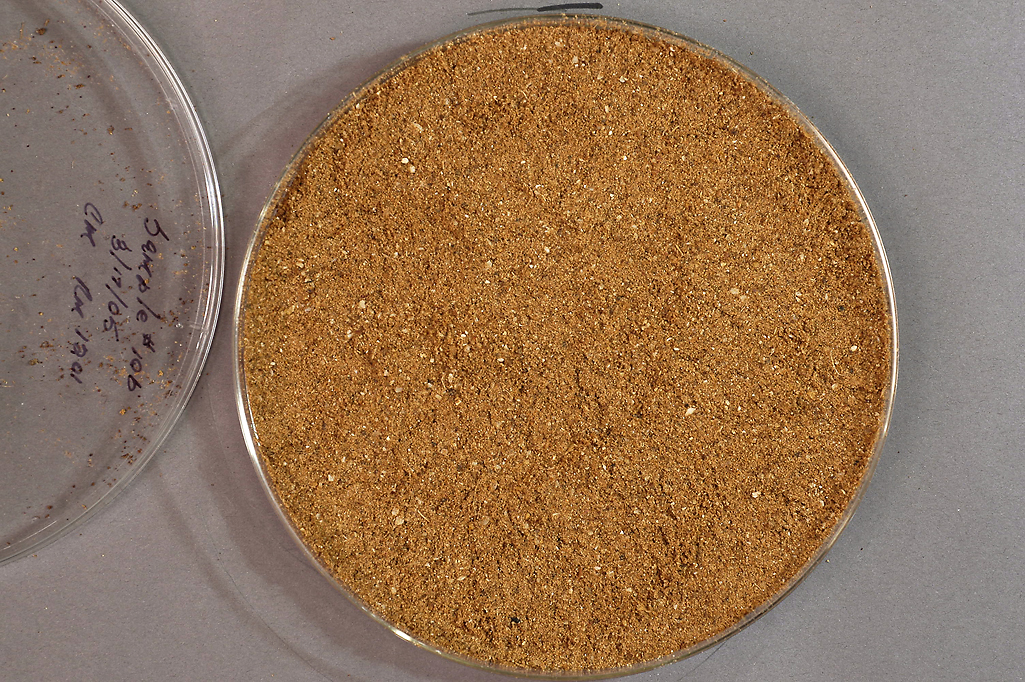
Archive photograph of meat-and-bone meal. Source: USDA Agricultural Research Service via Wikimedia Commons (public domain). Original photograph retained without AI editing; the layout crops its display. For illustration only: not a GT product or certified lot. Species, material category and regulatory eligibility are not established by this photograph.