Key fact: The European Commission has scheduled a feed implementation dialogue for 18 November 2026 at 14:00 CET. Imports and digital labelling are discussion topics, not an announced replacement for existing requirements. Commission event page.
A policy discussion with practical buying implications
The European Commission will hold an implementation dialogue on feed on 18 November 2026. Its agenda covers the practical operation of feed hygiene and marketing rules, including the import framework, establishment registration and approval, and digital tools that could complement physical labels. The event is invitation-only, with summary conclusions due afterwards. Commission event page.
For ingredient buyers, the useful question is not whether to remove documents now. It is where clearer procedures could reduce repeated work while preserving the evidence needed to identify, receive and use a consignment correctly. The published agenda describes a discussion about implementation and modernisation; it does not itself establish a new import procedure or digital-label permission.
The existing framework is the starting point
The Commission identifies registration, approval for certain activities, harmonised hygiene requirements and HACCP principles outside primary production among the main elements of Regulation (EC) No 183/2005. Its guidance also addresses the feed-import framework. Registration and approval should therefore not be treated as interchangeable descriptions when checking a counterparty's activities. Commission feed hygiene overview.
Separately, the Commission identifies Regulation (EC) No 767/2009 as the framework for marketing feed materials and compound feed. Its supporting measures include a feed-material catalogue and guidance distinguishing feed materials from additives and other product categories. Product classification is consequently a separate question from the commercial name printed on an offer. Commission feed marketing overview.
Commercial interpretation for procurement teams
The following approach is GT Nutritions' procurement recommendation, not an announcement of new legal obligations or a forecast of the dialogue's outcome.
Start by mapping one real purchase from supplier qualification to receipt. Record every point where someone retypes an address, copies a lot reference, requests the same certificate or checks an approval. Then distinguish duplication from a genuinely different control. Two documents that contain the same company name may still answer different questions: who sold the material, who manufactured it and which establishment performed a particular operation.
This exercise should produce specific improvement requests rather than a general demand for less paperwork. A buyer could ask for one verified source of establishment details, consistent terminology across forms, or a clear explanation of which party supplies each record. The objective is fewer ambiguous handovers, not fewer checks by default.
Make digital information usable at the receiving point
A useful internal test for digital product information is simple: can the receiving team identify the correct material and retrieve the relevant record without calling the salesperson?
For a proposed digital workflow, test the link on the device used in the warehouse. Check whether access requires a personal account, whether the page works on a phone and whether the record can be retained with the shipment file. Ask what happens if the link stops working or the published specification changes after dispatch. Keep the specification version agreed for the purchase separate from a general product page that may later be revised.
For internal workflow design, consider a lot-linked record containing the agreed product identity, specification version, available analysis and document references. This is a suggested record structure, not a statutory label checklist. Do not remove physical information on the assumption that a web link is an accepted substitute; obtain the appropriate compliance review before changing the labelling process.
Keep import checks specific to the transaction
Use the dialogue as a prompt to improve the questions asked before contracting. Identify the material, origin, intended use, destination and responsible operators. Ask the compliance team which registrations, approvals and shipment documents apply to that combination. Record the answer and its basis, rather than relying on a previous deal involving a similar-sounding ingredient.
An animal-origin protein and a cereal co-product should not inherit the same checklist merely because both are purchased for feed. Likewise, a commercial quality certificate should not be used to answer a separate question about market eligibility. Keep the nutritional decision, supplier qualification and destination review connected, but visible as different approvals in the purchase file.
Bring an example that can be acted on
If communicating implementation problems through a relevant representative body, prepare an anonymised example. State what was requested, which process it concerned, how much repeated handling it created and what clarification would help. Exclude confidential prices, supplier identities and personal data. A concise example makes it easier to distinguish inconsistent interpretation from an incomplete commercial file.
After the dialogue, review the published conclusions for concrete follow-up actions. Separate discussion points, guidance proposals and any subsequently adopted measures before changing operating procedures. Assign an owner to each relevant development instead of treating the event itself as a compliance deadline.
For buyers, the immediate opportunity is better organisation: one coherent product identity, clear responsibility for each document and a recoverable record of the checks behind a decision. That preparation can support simpler trade processes without making the evidence behind a shipment harder to understand.
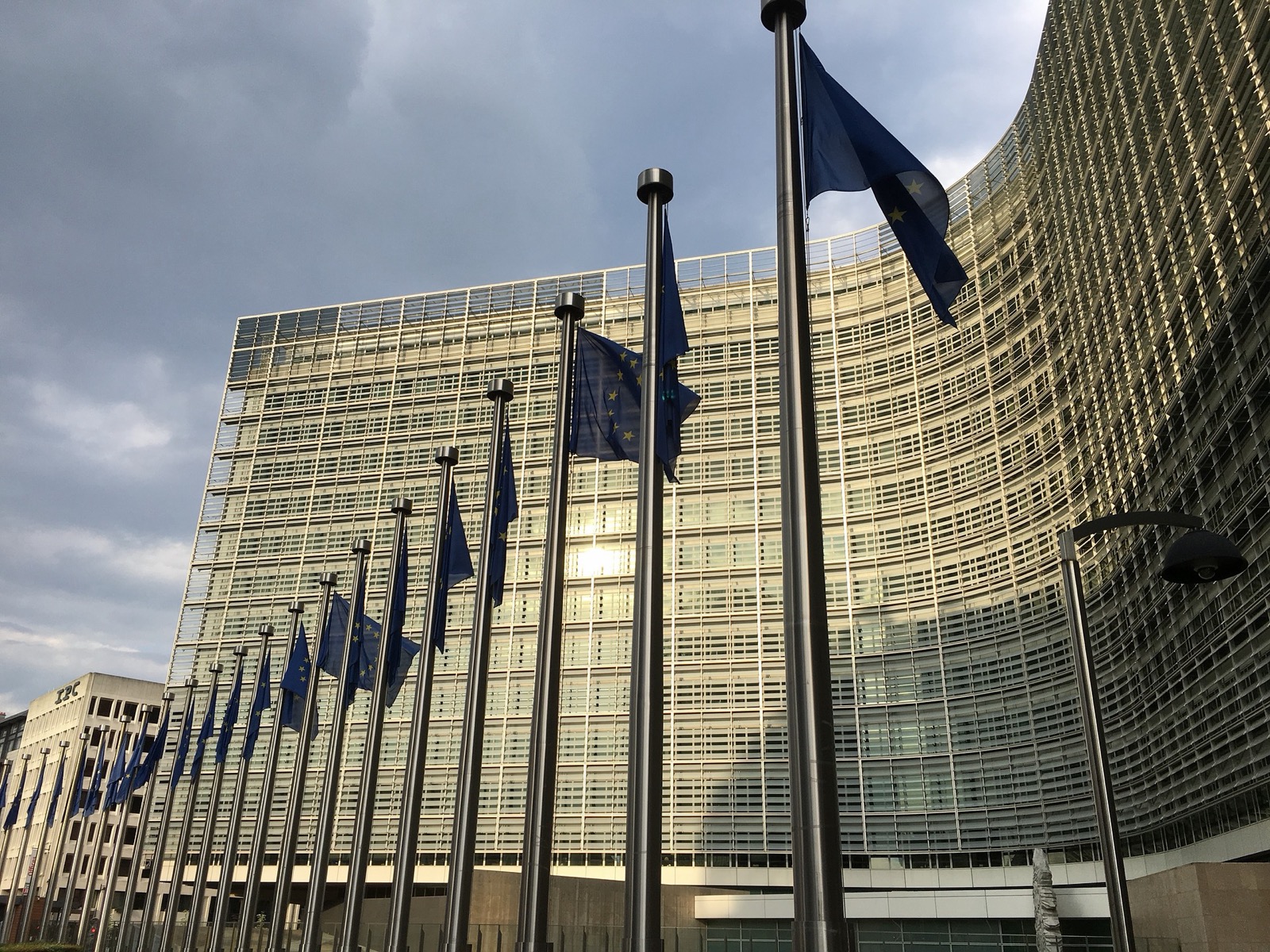
Archive photograph: Berlaymont building, Brussels, 7 May 2016. Photo: almathias / Wikimedia Commons, CC0. Resized only; not a photograph of the November dialogue.