Archived analysis. Original briefing date: 2026-10-31. Archive edition published 20 November 2026. Facts, observations and forecasts relate to their stated dates, not current quotations or shipment approvals.
Key fact: Commission Recommendation (EU) 2026/2297, adopted on 16 October and published on 20 October 2026, recommends targeted monitoring of forage materials and specified processing co-products. It is a recommendation, not a new blanket testing requirement for every feed ingredient. Official recommendation
Archived analysis prepared for the 20 November 2026 publication edition. Original research reference date: 31 October 2026. Reporting reflects the dated sources, not a current quotation or shipment approval. Subsequent developments are identified in the status note below.
What changed in October
The European Commission has issued a feed-monitoring recommendation covering nitrate and nitrite in forages and roughages, and nitrite in co-products from sugar beet, sugarcane, starch and alcoholic-drink production. Adopted on 16 October and published on 20 October 2026, it calls for monitoring with feed-business involvement and submission of occurrence data to EFSA. Commission recommendation
This recommendation does not replace the separate binding nitrite limits and exceptions in Directive 2002/32/EC. Its annex advice for specified co-products should not be presented as a universal statutory maximum. Commission recommendation
For procurement teams, the useful response is to make analytical requests more precise. A certificate containing a number is not, by itself, a complete answer. Buyers should agree what is being measured, which material the sample represents and how the result will be assessed before dispatch is scheduled. The following purchasing suggestions are commercial interpretation, not additional legal requirements.
Why the evidence matters
The scientific background is not new. EFSA's assessment, published on 4 November 2020, identified substantial gaps in feed occurrence data and limitations in assessing animal exposure, particularly for nitrite. Those limitations are a reason to improve evidence, not proof that an untested consignment is either unsafe or safe. EFSA scientific opinion
In a buying file, distinguish a missing result from a satisfactory result. A blank field should remain unresolved until the responsible quality specialist decides whether testing is appropriate for that material and intended use. Equally, do not turn a general monitoring initiative into an automatic rejection of every co-product without reviewing the actual lot evidence.
Commercial interpretation: specify the analytical basis
One detail deserves particular attention. The recommendation's annex expresses its nitrite advice using sodium nitrite, NaNO2, and a 12% moisture basis. That expression should not be confused with an unexplained nitrite-ion result or an as-received value. Recommendation, annex
Ask the laboratory to identify the analyte, units, reporting basis, moisture measurement, method and quantification limit. Have the quality reviewer confirm that the laboratory result and the contractual criterion are comparable. Do not perform an undocumented conversion in a commercial spreadsheet and then treat the converted number as the laboratory's original finding.
Keep both the original report and any reviewed interpretation. If a supplier sends a revised certificate, retain the earlier version with a clear superseded status rather than silently replacing it. This proposed document discipline makes later questions about acceptance easier to resolve.
Commercial interpretation: connect the sample to the shipment
Request the lot identifier, production date, sampling date, sampling location and the quantity represented. Where several production lots are assembled for one shipment, ask whether the report covers each lot or a defined composite. An attractive average should not replace an explanation of what was sampled.
Agree who samples, who commissions analysis and who makes the release decision. For a recurring supply programme, record what changes would trigger a fresh review: a different production site, a changed process, an unexplained certificate trend or a new customer application. Testing frequency should follow the quality team's risk assessment rather than a universal schedule invented by the purchasing department.
For example, an offer described only as beet co-product pellets should prompt a request for the exact material description and supporting specification. This is a hypothetical purchasing example, not evidence of a problem with any product or supplier.
Commercial interpretation: prepare data without inventing deadlines
EFSA's chemical-monitoring information, reviewed on 6 October 2026, shows that the 2026 transmission and validation deadlines have already passed. The October recommendation should therefore not be presented as reopening that reporting window. EFSA chemical-monitoring information
For a business considering participation, ask the competent authority or EFSA about the applicable reporting route and next collection arrangements. Meanwhile, retain structured sample and result information so that useful records are not lost. Do not promise a submission date that has not been confirmed.
Commercial interpretation: make release decisions explicit
Use a short acceptance note linking the contract specification, lot report and quality review. Record whether the lot is accepted, held pending clarification or rejected, and identify who made that decision. Where a result is unclear, obtain the laboratory's explanation before loading rather than asking logistics staff to interpret analytical chemistry.
Build the review time into the shipment plan. Agree how a hold affects loading instructions, document release and customer updates, including who bears any testing or delay costs under the contract. Give the customer a concise explanation of the outstanding evidence and the next decision point, without circulating an unreviewed result as a final safety conclusion.
The commercial objective is a documented purchasing decision, not a guarantee based on one certificate. Keep feed-use suitability with qualified nutrition and quality professionals, maintain applicable legal checks separately, and ensure that the evidence supplied to the customer matches the material actually delivered.
Status at 20 November 2026
Status checked 20 November 2026: the recommendation remains the October monitoring and prevention advice discussed here. EFSA's displayed 2026 chemical-monitoring cycle closed on 1 September, after the 30 June transmission and 31 August validation deadlines. No new submission window is established by this article; confirm the applicable route with EFSA or the competent authority. EFSA reporting calendar
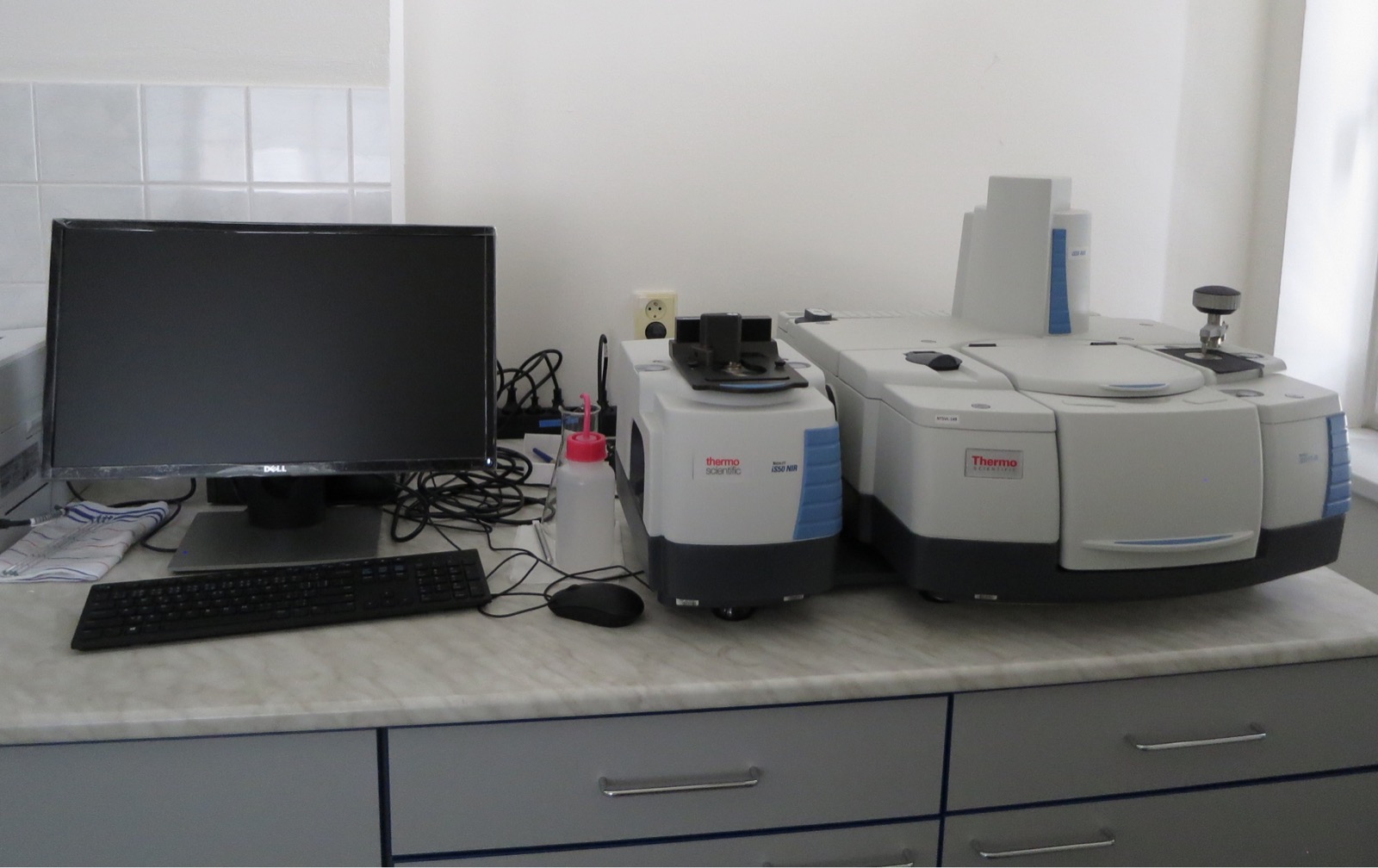
Archive photograph: infrared equipment in a Czech food-inspection laboratory, 8 January 2021. Photo: Sarka Na kopci / Wikimedia Commons. Image licensed under CC BY-SA 4.0. Resized and converted to JPEG; the layout crops the display. No generated or retouched content. Illustrative laboratory archive; not a test of a GT consignment.