Archived analysis. Original briefing date: 2026-10-02. Archive edition published 20 November 2026. Facts, observations and forecasts relate to their stated dates, not current quotations or shipment approvals.
Key fact: On 30 September 2026, the EU Council agreed a negotiating mandate on the remaining Omnibus X food and feed safety package. A negotiating position was not itself a new applicable shipment requirement.
Archive edition prepared 20 November 2026 from the briefing dated 2 October 2026. The cited 30 September announcement was a negotiating position, not a product-specific limit or permission to reduce controls. The Council's simplification overview, reviewed on 19 November, continued to describe Omnibus X measures as proposed; individual legal requirements still need their own applicable text and dates.
A policy milestone with a practical buying question
The Council's 30 September 2026 announcement set a negotiating position on food and feed safety simplification, not new shipment-release criteria. Council announcement
Our commercial interpretation is straightforward: keep current release controls intact and create a separate regulatory watchlist. Treat a supplier's claim that requirements have changed as a request for evidence, not as permission to reduce testing or accept incomplete documentation. A workable purchasing process should distinguish a political announcement, a proposal, a published legal measure and its application date.
What the announcement actually says
The mandate proposed lowering certain pesticide-residue limits to technical zero after impact assessment, with possible transitions. It described negotiation with Parliament as a subsequent step, not product-specific numerical limits already applicable. Council announcement
For commercial planning, we suggest keeping three dates separate: the announcement date, any eventual legal publication date and the relevant application date. Do not assume that goods contracted, manufactured or dispatched before a future change will qualify for a transition. Ask the responsible compliance specialist to establish the conditions from the applicable text before relying on them in a contract.
Check the ingredient rather than a generic compliance statement
The Commission explains that a maximum residue level is the legally tolerated level of a pesticide residue in food or feed, and directs users to its database for crop and pesticide limits. That provides a starting point for checking the applicable requirement, not a substitute for identifying the product correctly. Commission MRL overview
Our recommended procurement file should identify the ingredient, processing route, raw-material origin, intended destination and the basis used for the compliance assessment. For processed plant ingredients, ask the technical reviewer to establish which commodity classification and treatment of processing are relevant. Avoid copying a limit from an apparently similar raw crop without checking whether that comparison is valid for the offered material.
Where analysis is required by the buying specification, request the relevant method, reporting units, sampling basis and analytical reporting limits. A result described only as compliant or not detected can leave a reviewer unable to understand what was actually tested. This is a suggested evidence standard; it is not a claim that every feed ingredient needs the same pesticide panel or an identical testing frequency.
Keep feed materials separate from feed additives
The Commission identifies Regulation 767/2009 as the framework for marketing feed materials and compound feed, and links guidance distinguishing materials, additives and other regulated products. Buyers should establish the category before deciding which documentation applies. Commission feed marketing guidance
Our commercial recommendation is to avoid transferring a reform headline about one category into the purchasing rules for another. An enquiry for corn gluten meal or vital wheat gluten should retain its own product identity, agreed specification and intended-use review. If a formulation also includes an additive, assess that additive separately. A shared delivery or commercial invoice should not obscure distinct compliance questions.
Retain the evidence chain while reducing duplication
The Commission's feed-hygiene overview describes operator registration, approval for certain activities and HACCP principles for businesses beyond primary production. Those requirements provide existing context for supplier qualification; the September negotiating announcement did not itself replace that framework. Commission feed hygiene overview
We would simplify a buying file by removing duplicate requests, not by removing its evidence chain. Keep one controlled specification, one clear approval record and a lot-level document set that can be retrieved by the people making the release decision. Record who supplied each document, which lot it covers and whether it is current, superseded or awaiting clarification. If a laboratory report cannot be linked to the offered lot, request the missing link rather than treating an attractive result as sufficient evidence.
Make the contract change process explicit
Before agreeing forward deliveries, we suggest defining who monitors regulatory developments, who reviews their product-specific relevance and who approves any resulting specification change. Ask the contract reviewer to address documentary responsibilities, notification deadlines and the handling of a lot that cannot be released. Do not assume a broad compliance warranty resolves every operational question.
At the next buying review, classify each open issue as current requirement, proposed change, confirmed future requirement or unresolved interpretation. Keep proposed changes outside the release checklist until the competent reviewer confirms their legal basis and timing. That approach can reduce repeated discussion while preserving accountability. The commercial opportunity is better preparation and clearer files, not an unsupported promise of cheaper compliance, easier imports or lower ingredient prices.
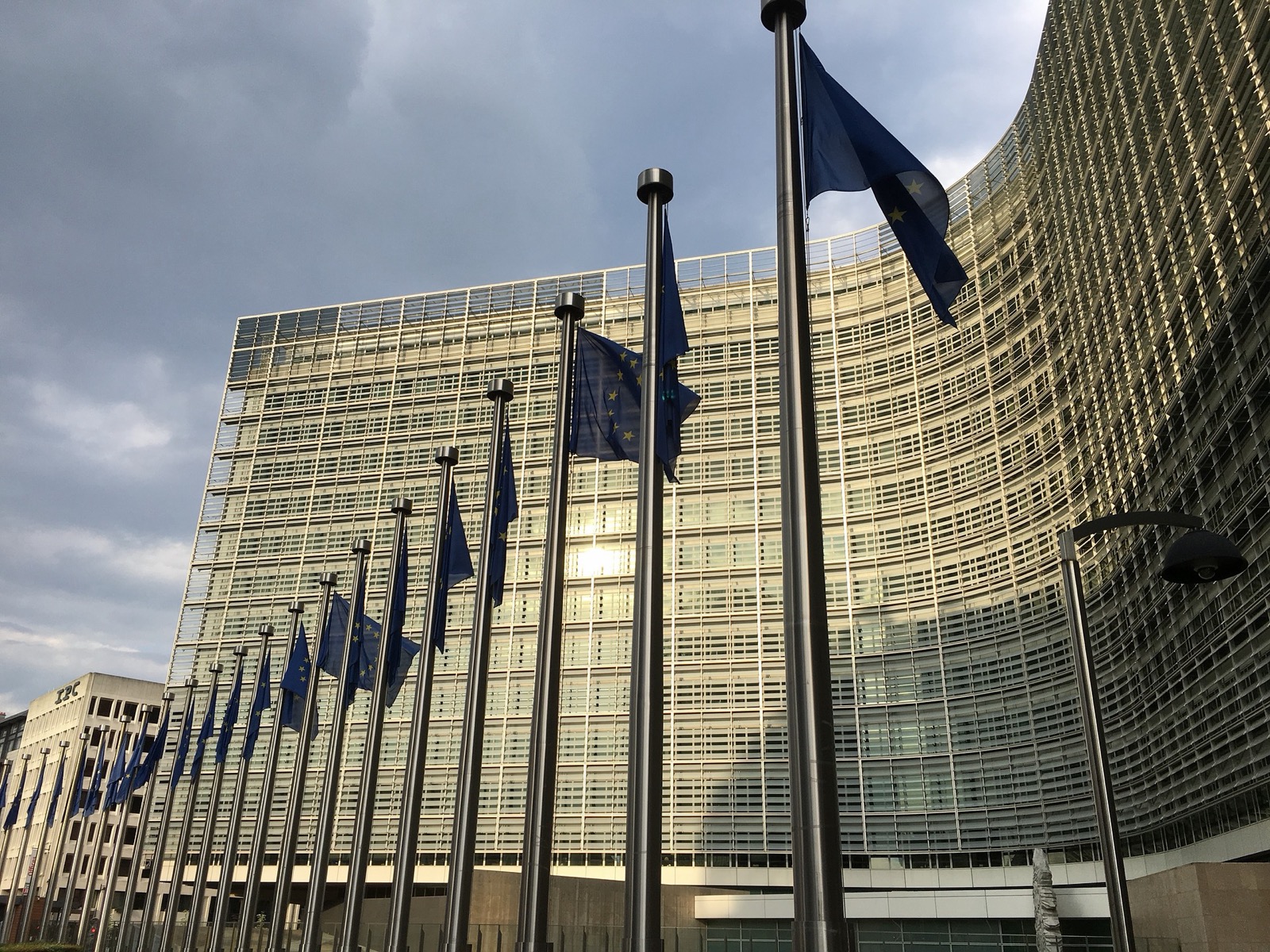
Archive photograph: Berlaymont building, Brussels, 7 May 2016. Photo: almathias / Wikimedia Commons, CC0. Resized only; not a photograph of the November dialogue.