Archived analysis. Original briefing date: 2026-08-26. Archive edition published 20 November 2026. Facts, observations and forecasts relate to their stated dates, not current quotations or shipment approvals.
Key fact: Recommendation (EU) 2026/1307 recommended PFAS monitoring in feed during 2026-2028 and analytical limits of quantification at or below 0.1 micrograms/kg for each individual PFAS.
Archive edition prepared 20 November 2026 from the briefing dated 26 August 2026. The regulatory discussion concerns the June 2026 recommendation; it is not a new November feed limit or a shipment-specific compliance determination.
The essential monitoring provisions
Recommendation (EU) 2026/1307, adopted on 11 June and published on 16 June 2026, covered monitoring during 2026-2028, including aquatic feed materials. It identified PFOS, PFOA, PFNA and PFHxS, referenced Regulation 152/2009 for sampling and recommended results submission by 30 June 2029. It did not establish a feed maximum level. Official recommendation
Why marine-ingredient buyers should pay attention
Commercial interpretation: We recommend treating this as an evidence-design problem. Define what the customer needs to know about the offered lot, then establish whether the proposed documents can answer that question. Do not substitute a generic assurance for a usable result.
For professional buyers, the practical response is to improve evidence quality before customers or authorities request it. A useful supplier discussion should cover the production origin, raw-material catch or processing area where applicable, lot identity, sampling method, laboratory accreditation, analytical panel and method sensitivity. A result reported simply as "not detected" is incomplete unless the certificate also states the compound-specific limit of quantification.
Sampling deserves equal attention. PFAS analysis is only as useful as the sample's connection to the commercial lot. Buyers should be able to trace the test sample to a batch, production date, storage location and shipment documentation. Where composite samples are used, the sampling plan should explain how increments were taken and combined. This reduces the risk of receiving a technically valid laboratory result that cannot be confidently assigned to the delivered material.
Build specifications around evidence, not assumptions
Commercial interpretation: A proportionate procurement approach can use risk-based tiers rather than imposing one blanket rule on every ingredient. Origin history, environmental context, prior results, customer requirements and intended animal species can then guide testing frequency.
Specifications should define the requested PFAS panel, reporting units, method capability and documentation rather than inventing a contractual limit that has no agreed regulatory basis. When a customer requires an internal action level, that threshold should be clearly identified as a commercial requirement, separate from EU statutory maximum levels. Contracts should also explain what happens if a result is above the agreed action level: confirmation testing, retention-sample analysis, lot hold, investigation or rejection.
Alternatives should be evaluated nutritionally and legally, not treated as automatic substitutes. A marine protein or oil contributes a specific nutrient profile, while processed animal proteins, poultry proteins and plant-derived concentrates have different amino-acid, fat, mineral and regulatory characteristics. Reformulation decisions therefore require the nutritionist, quality team and buyer to assess the complete feed application.
Decide how each result will be reviewed
Before commissioning analysis, agree how the buyer will distinguish a numerical finding, a result below the stated reporting limit and a result that cannot answer the contractual question. Ask the reviewer to record the laboratory's reporting capability beside the customer's requirement. Do not convert an unclear report into an automatic acceptance or rejection merely to complete the purchasing sheet.
Where a certificate omits a method, unit or lot reference, request a correction linked to the original report. Keep both versions in the shipment file and identify which one was accepted. For repeat analysis, state which retained sample will be used, who authorises the instruction and how conflicting results will be reviewed. Agree those responsibilities before a disagreement creates pressure to dispatch.
For an order filled from more than one batch, ask which analysis covers each quantity and whether release can be recorded separately. Match the approved portion to its loading record. Do not let acceptance of the first batch clear an untested replacement or an unidentified balance under the same purchase-order number.
Make the exception process commercially usable
We suggest separating a technical hold from a missing-document hold in the order register. A clarification that only changes an address is different from an unresolved analytical finding; route each to a person authorised to decide it. Record what can proceed while the issue is open, rather than assuming that warehouse preparation means the lot has been released.
Ask the contract reviewer to address storage, repeat-testing and delivery consequences if clarification takes longer than planned. Keep any concession specific to the identified lot and customer requirement. Once the issue is resolved, explain why the evidence was sufficient; do not merely change the status colour. This preserves a decision trail that can be applied consistently when the next comparable enquiry arrives.
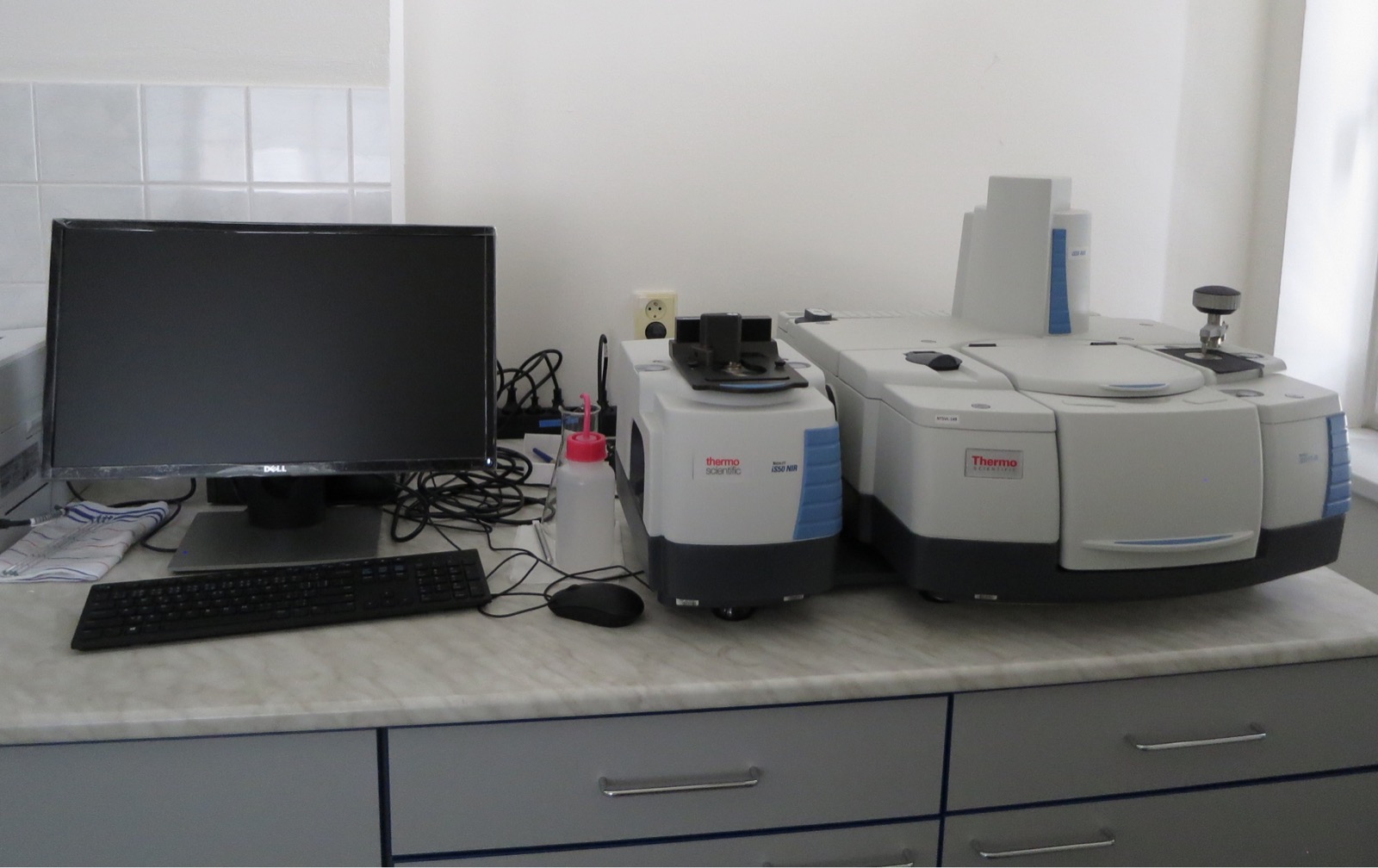
Archive photograph: infrared equipment in a Czech food-inspection laboratory, 8 January 2021. Photo: Sarka Na kopci / Wikimedia Commons. Image licensed under CC BY-SA 4.0. Resized and converted to JPEG; the layout crops the display. No generated or retouched content. Illustrative laboratory archive; not a test of a GT consignment.