Archived analysis. Original briefing date: 2026-10-20. Archive edition published 20 November 2026. Facts, observations and forecasts relate to their stated dates, not current quotations or shipment approvals.
Key fact: WMO's 19 October 2026 update highlights authoritative, traceable forecasts as its services commission met. It is a discussion about weather services, not an announcement of particular port closures or feed-delivery delays. WMO update
Archived analysis prepared for the 20 November 2026 publication edition. Original research reference date: 20 October 2026. Reporting reflects the dated sources, not a current quotation or shipment approval. Subsequent developments are identified in the status note below.
A timely focus on trusted forecasts
On 19 October 2026, the World Meteorological Organization published a call for trusted forecasts and warnings as its services commission, SERCOM, met to address services supporting sectors including agriculture and shipping. The 19 October update described the meeting's planned discussions on standards, competencies and digital transformation. It does not establish a new cargo-handling rule or report an outcome from the completed meeting. WMO update
For professional feed buyers, the useful distinction is between a weather signal and a verified operational consequence. A warning deserves attention, but a purchasing decision also needs the right geography, time window and confirmation from the organisation responsible for the affected operation.
Commercial interpretation for shipment planning
GT Nutritions recommends a short verification chain: identify the authoritative notice, match it to the shipment, obtain an operational update and record the resulting decision. These are commercial planning recommendations, not navigation instructions or new requirements announced by WMO.
Start with the actual milestones: loading, terminal receipt, vessel departure, transshipment and final collection. Give each a location and expected time. A general forecast for a coastline should not automatically change every milestone on the same country's shipment list. First ask which activity is exposed and who can confirm its status.
Check the source and the validity period
The WMO-IMO Worldwide Met-Ocean Information and Warning Service displays marine forecasts and warnings within the maritime safety information framework. Its information comes from designated national services or authorities. The website cautions that products can be delayed or interrupted and directs users to the issuing service as the authoritative source. WWMIWS portal
For an alert affecting an open order, retain the issuing authority, notice reference, issue time, validity period and covered area. Keep time zones explicit. If the alert was forwarded as a screenshot, obtain the original source before treating it as the latest position. Record when it was checked, so the next person can see whether the information remains usable.
Do not use an old warning to justify a current delivery change without checking for an update or cancellation. Equally, a missing bulletin on an aggregator should not be treated as evidence that conditions are normal. Resolve the gap through the authoritative service and the shipment operator.
Separate weather information from operating status
WMO's Marine Meteorology and Oceanography Programme describes a coordinated system in which national services cover agreed sea areas and issue weather and sea bulletins, with special warnings for hazardous situations. These products inform maritime users; they are not individual terminal operating notices. WMO marine services background
Ask the carrier, terminal or forwarder a specific question: does the notice change the nominated vessel's schedule, the terminal's receiving arrangements or the agreed loading operation? Request the revised milestone and its confirmation time. Keep a possible disruption separate from an announced suspension, and both separate from an actual missed departure.
Leave vessel safety and navigation decisions to the responsible maritime professionals. The buyer's role is to understand the commercial consequence and coordinate the order, rather than infer a safe route from a public weather map.
Protect the ingredient during any revised handling plan
If a shipment is held, ask where the material will remain and who controls it. Refer any proposed change in storage, handling or transport to the agreed product specification and responsible quality team. Do not accept an improvised protection measure simply because it preserves the original dispatch target.
GT's catalogue includes poultry meal, corn gluten meal and salmon oil, with different supply formats and product conditions. The relevant planning question is therefore what the agreed shipment requires, not whether every feed ingredient can follow the same contingency. GT product catalogue
For each affected order, request the available storage arrangement, revised dispatch window and next confirmation deadline. If a different warehouse, loading method or carrier is proposed, identify which approvals must be repeated. Keep the lot and document references connected to the revised movement so receiving staff can reconcile what actually arrives.
Give the customer a decision rather than a weather headline
Use a concise update: the verified notice, the operator's response, the affected milestone and the proposed action. Where there is no confirmed schedule change, say that monitoring continues and specify the next check. Where a change is confirmed, distinguish the revised estimate from a guaranteed arrival commitment.
Offer only workable choices. These might be to retain the booking pending the next operator update, move dispatch to a confirmed alternative window, or investigate another approved supply option. Identify any cost or approval still outstanding before presenting an option as ready to execute.
That discipline makes weather information useful without exaggerating it. The objective is not to relay every forecast to the customer. It is to identify which orders need a decision, preserve product controls and communicate the latest verified shipment position.
Status at 20 November 2026
Status checked 20 November 2026: SERCOM-4 took place on 19-23 October. This archive discusses WMO's opening update, not adopted meeting outcomes. No current marine warning is reproduced here; obtain fresh information from the issuing authority and the shipment operator. WMO event record, WMO-IMO warning portal
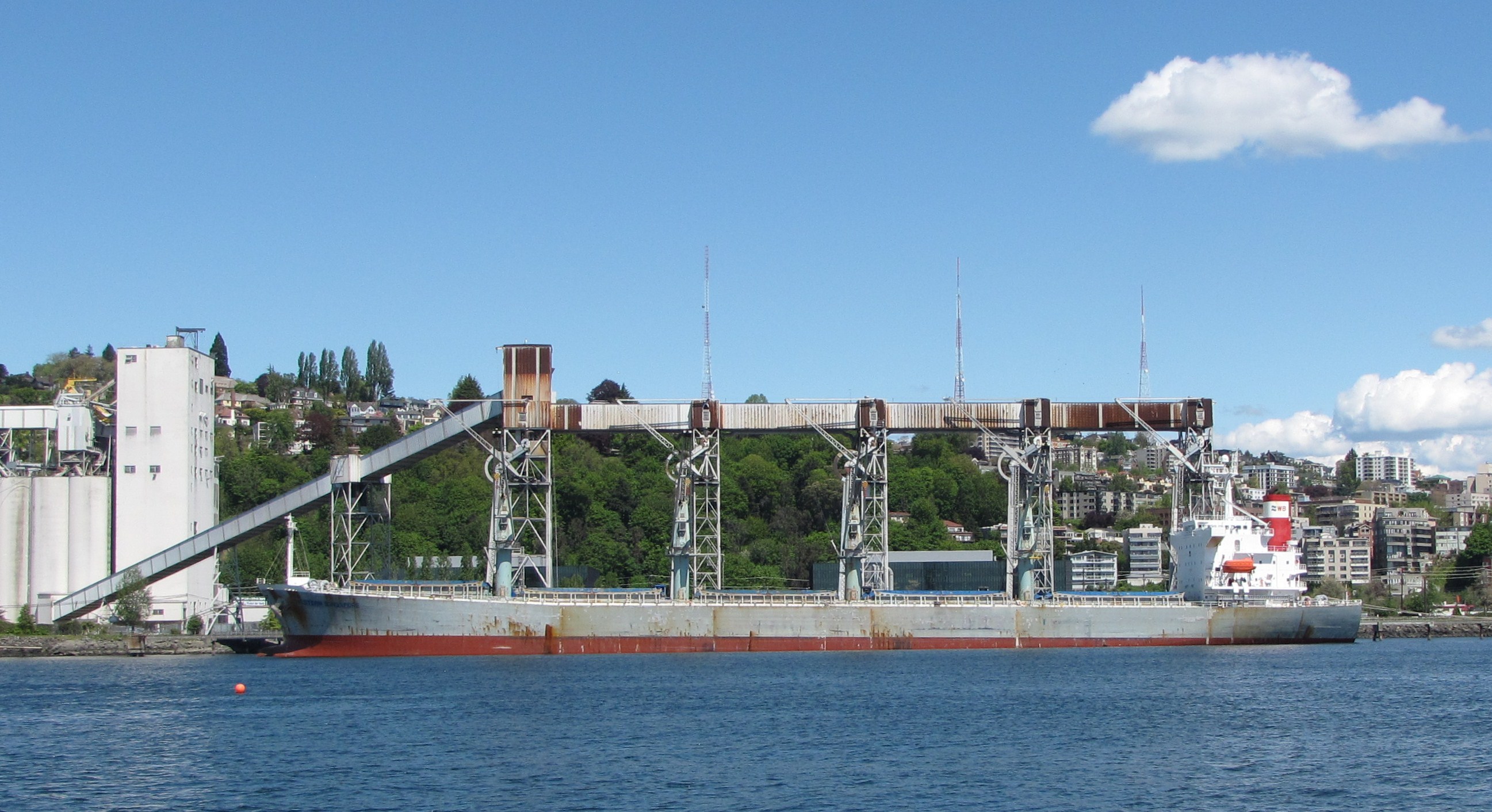
Archive photograph: bulk carrier alongside the Pier 86 grain terminal in Seattle. Photo: Greg Goebel / Wikimedia Commons, CC BY-SA 2.0. Original photograph retained without AI editing; the layout crops its display. The image remains under CC BY-SA 2.0. Illustrative only: not a GT shipment or evidence of a current disruption or any depicted operator's endorsement.