Archived analysis. Original briefing date: 2026-11-08. Archive edition published 20 November 2026. Facts, observations and forecasts relate to their stated dates, not current quotations or shipment approvals.
Key fact: Iowa's signed 6 November proclamation explicitly lists soybean meal and distillers grains, although the accompanying short press release omits them. The relief excludes Interstate highways and expires on 6 December unless ended earlier or extended. Signed proclamation, announcement.
Archived analysis prepared for the 20 November 2026 publication edition. Original research cutoff: 8 November 2026, Europe/Riga. Reporting reflects the dated sources, not a current quotation or shipment approval. Subsequent developments are identified in the status note below.
What changed on 6 November
Iowa extended its harvest transport proclamation on 6 November 2026, effective immediately through 6 December. The signed order covers specified agricultural materials, including corn, soybeans, soybean meal and distillers grains. It permits qualifying overweight movements without a permit, subject to conditions including a 90,000-pound gross ceiling, axle restrictions and posted road and bridge limits. Interstate highways are excluded. This is a temporary Iowa measure, not an international freight concession. Signed proclamation.
There is a useful detail for feed buyers: the shorter announcement lists several crops and agricultural inputs but leaves out soybean meal and distillers grains. The signed text names both. Anyone screening the announcement alone could therefore miss relevant product coverage. Official announcement, signed proclamation.
That difference makes this more than a local transport headline. It is a practical example of why commercial teams should read the operative document before translating policy news into procurement decisions.
Commercial interpretation: start with the material
The following recommendations are GT Nutritions' commercial interpretation, not findings that freight prices or delivery times have improved.
Start with the exact material offered. Ask the seller and carrier to identify the product description used for transport eligibility, alongside the contract description. Do not assume that coverage for corn extends automatically to every corn-derived ingredient, or that soybean meal establishes a precedent for other protein meals. If a product is not clearly identified, obtain confirmation before including any allowance in a cost comparison.
For European, African, Middle Eastern and Asian buyers, the immediate question is whether the proposed shipment actually has an eligible Iowa road leg. A purchase from another origin should not inherit an Iowa transport assumption merely because the wider grain market is discussing it. The relevant evidence is the route behind the offer, not the nationality of the trading company.
Check the full journey, not the first collection
Request a simple transport map: collection point, inland terminal, export port, ocean leg and destination delivery. Against each leg, record the responsible party, quoted quantity basis, loading window and any stated restriction.
A temporary allowance at collection should not be treated as permission for the entire journey. Ask the carrier to confirm how the planned vehicle, axle configuration and road selection fit the applicable rules. Where the route changes, require a fresh check rather than carrying the first leg's assumption forward. Keep that confirmation with the offer so a colleague can understand the basis without reconstructing a telephone conversation.
This is also the point to separate gross vehicle weight from saleable cargo. The proclamation's gross ceiling is not a promise of ingredient payload. For commercial comparison, request confirmed net tonnes per movement and the assumptions behind them. Leave the transport compliance calculation to the qualified carrier.
Use freight reports for the question they answer
At the original 8 November research cutoff, USDA's Grain Transportation Report page listed its latest issue as 5 November 2026; at the 20 November publication check it listed 19 November. The weekly publication covers transport developments and volume and price data across barge, rail, truck and ocean movements. USDA also maintains a separate container-transport resource describing its weekly container-availability snapshot at selected US intermodal locations. These are distinct information tools. Grain Transportation Report, container transport resources.
Our recommendation is to use such information to challenge a quotation intelligently, not replace it. Ask which mode, origin, destination, observation date and cargo format a comparison represents. A bulk-grain indicator should not be entered unchanged as the freight cost for a bagged feed ingredient in a container. Likewise, an availability snapshot should prompt an equipment question, not be recorded as a confirmed booking.
Require an auditable cost revision
If a supplier cites the extension as a reason for a better offer, ask for the revised commercial calculation. Which inland charge changes? Is the saving included in the selling price? Does the offer retain the same net quantity, specification, delivery point and validity period? What happens if loading falls outside the temporary window?
Keep the old and revised quotations together. Compare like-for-like delivered costs, identify currency and unit bases, and label any allowance that remains unconfirmed. A smaller inland charge is useful only when its effect on the buyer's agreed price is clear. Do not book an assumed saving simply because a policy measure sounds favourable.
The same discipline applies to purchasing cereal co-products and concentrated plant proteins. Maintain separate checks for the ingredient specification and the logistics offer. A transport advantage is not evidence of nutritional equivalence, lot quality or suitability for a particular formulation.
A decision that can be handed over
Before approving a purchase, the file should answer five questions: what material qualifies, which route is covered, when the movement occurs, what net quantity the carrier confirms, and where any commercial benefit appears in the quotation. Mark unanswered questions as pending rather than resolving them through assumption.
The buying opportunity is not to predict cheaper freight. It is to identify a legitimate, documented improvement without importing the wrong product, route or time window into the deal. That produces a decision colleagues can review, execute and explain after the headline has passed.
Status at 20 November 2026
Status checked 20 November 2026: the signed 6 November Iowa order specifies expiry on 6 December unless sooner terminated or extended. No later termination or replacement was found in the official-source checks for this review; carriers must still verify the rules for the actual movement. USDA's Grain Transportation Report page now lists 19 November as its latest issue. No freight-rate change or shipment saving is established here. Signed Iowa order, Official proclamation index, USDA transport reports
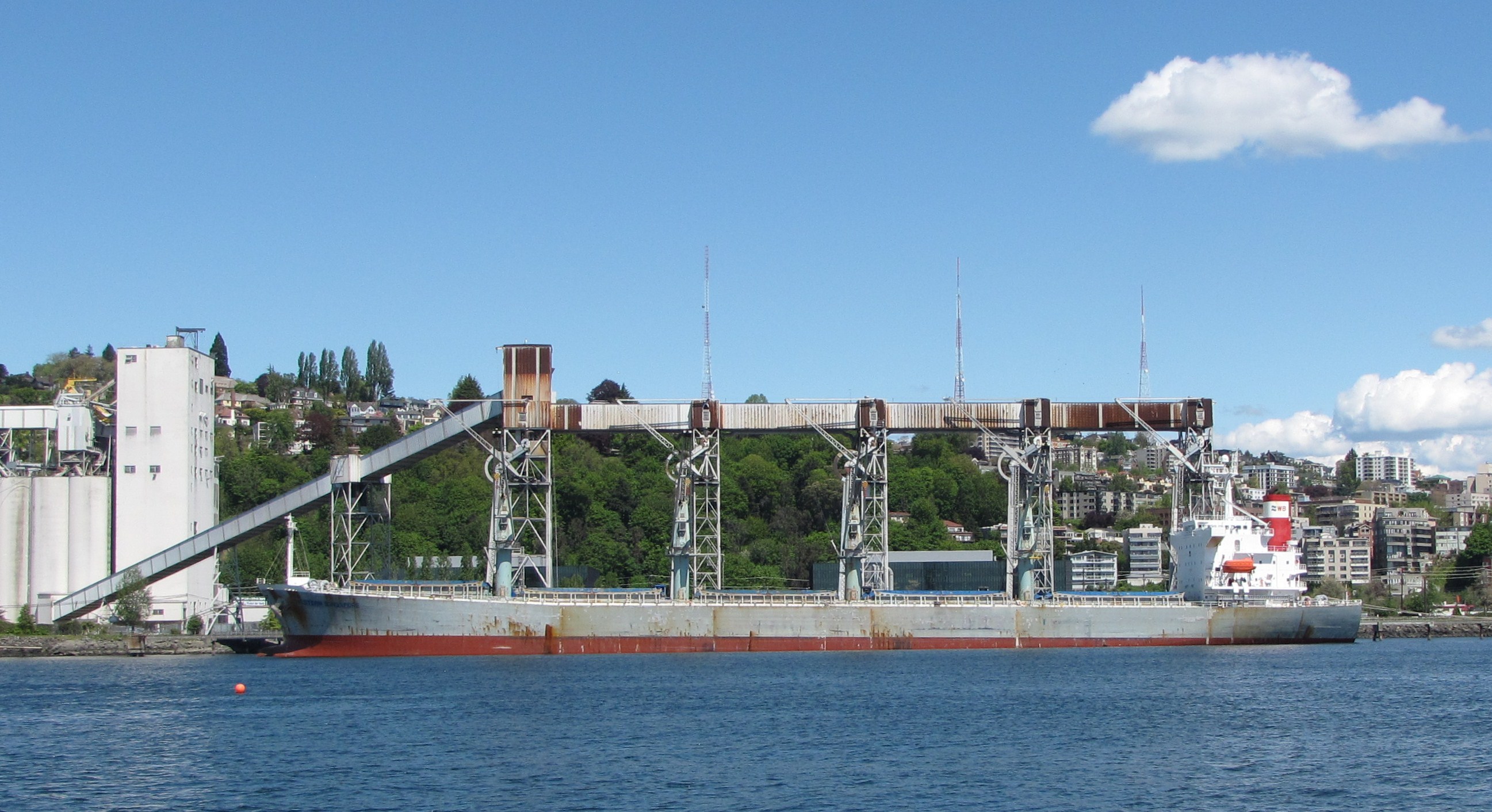
Archive photograph: bulk carrier alongside the Pier 86 grain terminal in Seattle. Photo: Greg Goebel / Wikimedia Commons, CC BY-SA 2.0. Original photograph retained without AI editing; the layout crops its display. The image remains under CC BY-SA 2.0. Illustrative only: not a GT shipment or evidence of a current disruption or any depicted operator's endorsement.