Key fact: NOAA's Climate Prediction Center issued its latest ENSO discussion on 12 November 2026. It puts the likelihood of a strong-to-very-strong El Niño through January-March 2027 above 79%, while explicitly warning that associated impacts are not guaranteed. This is a climate outlook, not a probability that a particular feed shipment will fail. NOAA CPC discussion.
The new signal is about preparedness
NOAA's Climate Prediction Center published its latest ENSO Diagnostic Discussion on 12 November 2026. It reports a strengthening El Niño and a greater-than-79% likelihood of strong-to-very-strong conditions through January-March 2027. It also cautions that expected impacts are not guaranteed. Those two points belong together in a buying discussion. NOAA CPC discussion.
Japan's Meteorological Agency updated its outlook on 10 November. It expects the event to peak in the first half of the northern-hemisphere winter and continue into spring 2027. That provides another reason to review procurement assumptions beyond the immediate loading month, without turning the outlook into a promise about a particular origin. JMA outlook.
The distinction between a global signal and a local decision is important. In its 21 October statement, the World Meteorological Organization stressed that seasonal outlooks do not predict individual events and that regional and national forecasts are essential for deciding where and when to act. This is background guidance, not a second new November announcement. WMO statement.
Commercial interpretation: start with the actual source
The following is GT Nutritions' procurement interpretation, not a forecast of feed prices, crop losses or delivery failures.
For each open requirement, identify the proposed production area, processing site and loading point. Keep these separate in the enquiry record. A country name alone is too broad a basis for deciding whether to change a purchase. Ask the supplier which local observations, official forecasts or operational notices are relevant to the actual offer.
Record whether the goods are already produced, allocated from existing stock or dependent on a future production run. Ask for the evidence supporting that description. The commercial question is not simply whether a region appears on a climate map; it is which remaining steps must happen before the contracted goods can be loaded.
Put dates around the uncertainty
Build a short sequence covering availability confirmation, quality release, inland movement and the proposed loading window. Mark which dates are confirmed and which are estimates. Give each unresolved step an owner, a next check date and an explicit question that the next check must answer.
Request updated evidence when the offer moves between stages. A production estimate should not silently become a loading commitment, and a booking reference should not be presented internally as proof that cargo has departed. Keep the original promise and subsequent updates so the team can explain a change rather than reconstruct it from scattered messages.
Qualify alternatives before calling them replacements
Ask for an alternative-source proposal where continuity matters, but review it on its own specification and permitted application. Do not label a different ingredient as interchangeable because it supplies a similar headline protein figure. Put any proposed formulation change through the customer's normal technical approval process.
For the same ingredient from another source, compare the contractual basis, analytical documentation, packaging and destination requirements. Establish what additional qualification would be needed and who can authorise it. An alternative that is merely available is different from one that is approved and ready to purchase.
Connect the sourcing plan to the delivery route
Ask the logistics provider to identify any current, route-specific limitation and to distinguish confirmed notices from contingency planning. Request the date and source of a reported restriction. Do not describe a port or inland corridor as disrupted solely because an ENSO outlook has been issued.
Where timing is critical, obtain a separately identified alternative loading or routing proposal. Compare its operational conditions and commercial terms without assuming it will be needed. Document the point at which the buyer must decide, rather than presenting an unpriced or unconfirmed fallback as guaranteed capacity.
Set decision triggers, not blanket reactions
Agree what would justify changing an order: a missed evidence deadline, a revised production confirmation, an official local warning or a documented transport restriction, for example. These are proposed procurement triggers, not claims that any such event has occurred. Give the responsible buyer authority to request a review when a trigger is met.
Keep a distinction between monitoring and committing. A team can collect local updates and qualify another source without cancelling an existing order or increasing stock. Before making either decision, assess the actual requirement, contractual position and available evidence rather than relying on the strength label attached to El Niño.
Keep the plan short enough to use
A useful sourcing note should answer five questions: what goods are needed, which source is proposed, which dates remain conditional, what evidence is missing and what decision comes next. Link supporting documents rather than copying every forecast into the main record.
The November outlook warrants attention, but attention should produce a better purchasing file, not an unsupported market prediction. Prepare alternatives, check local evidence and preserve clear approval points. That makes the response proportionate to the transaction while leaving room to change course when the facts change.
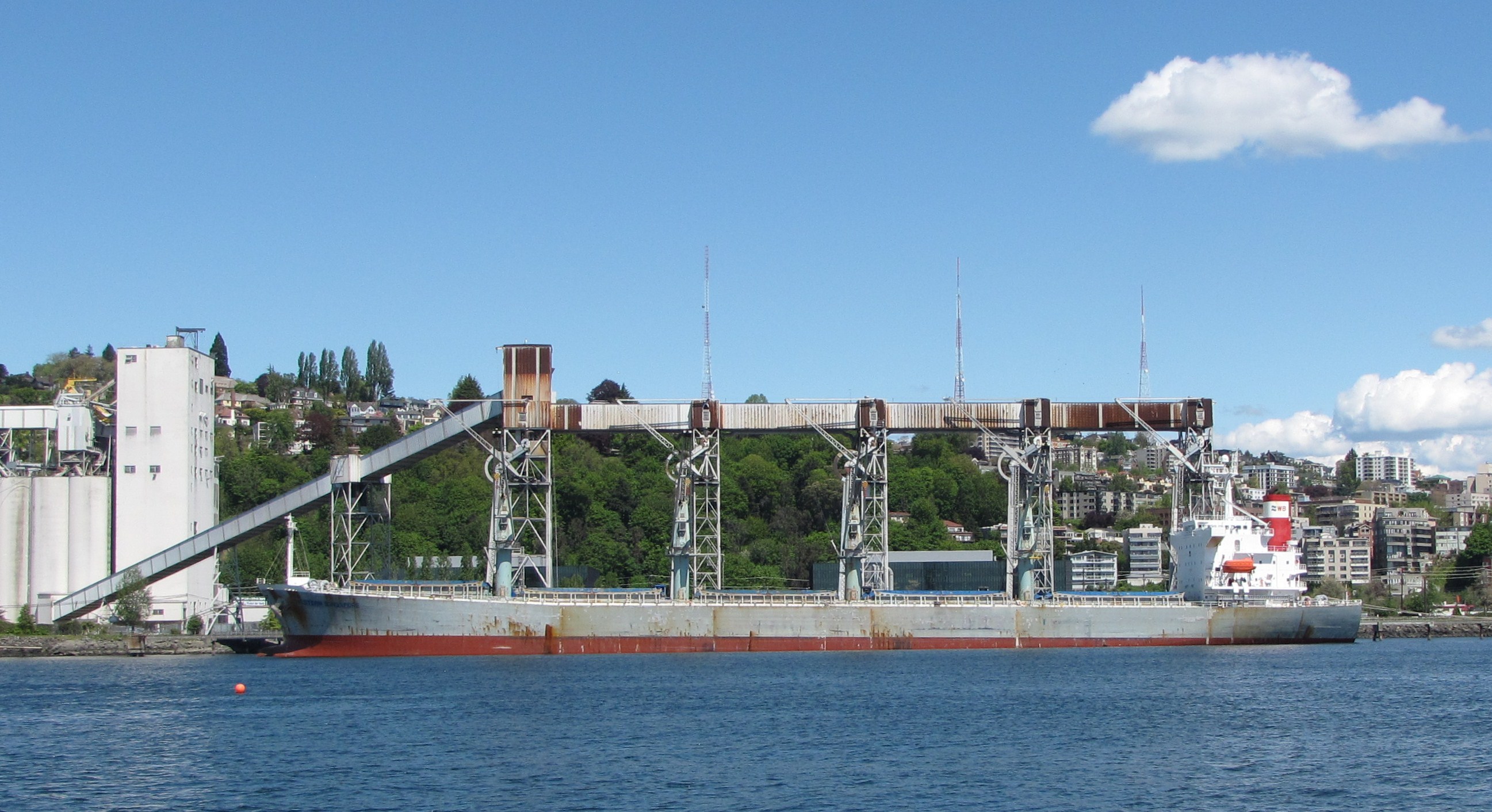
Archive photograph: bulk carrier alongside the Pier 86 grain terminal in Seattle. Photo: Greg Goebel / Wikimedia Commons, CC BY-SA 2.0. Original photograph retained without AI editing; the layout crops its display. The image remains under CC BY-SA 2.0. Illustrative only: not a GT shipment or evidence of a current weather disruption or any depicted operator's endorsement.