Research reference date: 16 November 2026. Published 20 November 2026. Market observations refer to the periods identified below, not a current quotation or consignment approval.
Key fact: USDA's 13 November outlook raises the 2026/27 U.S. soybean production forecast by 12 million bushels, but reduces projected ending stocks by 15 million bushels to 300 million. Domestic crush is unchanged from October. USDA Oil Crops Outlook.
The crop headline is only one part of the balance
The November Oil Crops Outlook, published by USDA's Economic Research Service on 13 November, contains a useful contrast for protein buyers. U.S. soybean production for 2026/27 is forecast at 4.57 billion bushels, up 12 million from October. Yet exports are raised by 25 million bushels to 1.72 billion, domestic crush is unchanged, and projected ending stocks decline to 300 million bushels. These are marketing-year forecasts, not quantities offered to a buyer today. USDA oil-crops outlook.
The crop estimate itself was released on 10 November and reflects conditions as of 1 November. NASS described the soybean production and yield forecasts as record highs. The later outlook explains the broader balance; it does not represent a separate harvest completed on 13 November. USDA Crop Production.
Follow the separate meal table
USDA's November WASDE table keeps projected U.S. soybean-meal production unchanged from October at 65.8 million short tons. It reduces meal beginning stocks from 450,000 to 333,000 short tons and projected ending stocks from 450,000 to 400,000. The table therefore does not translate the higher bean-production forecast into an increase in projected domestic meal output. Note the units: the bean balance uses bushels, while meal is shown in short tons. November WASDE, U.S. soybeans and products table.
Commercial interpretation: ask for available product, not a crop allocation
The purchasing recommendations that follow are GT Nutritions' interpretation, not USDA advice or a price forecast. Treat the report as a prompt to examine supply assumptions, rather than as confirmation that a supplier can accept additional orders.
For a meal enquiry, ask what volume the seller can offer against the required specification and shipment period. Request the loading location, packaging, quotation validity and earliest feasible dispatch window. Distinguish goods already available from an indication dependent on future processing. If the offer is conditional, identify what must happen before the quantity becomes firm.
Keep the offered material separate from the wider crop narrative. Ask whether the quoted origin, processing source and quality documentation apply to the actual lot being proposed. Do not present a national production forecast to a customer as proof that a specific grade is in stock or that a loading slot has been reserved.
Build a protein comparison that the technical team can approve
When evaluating other protein ingredients alongside soybean meal, prepare a comparison for the nutrition or formulation team rather than assuming interchangeability. Ask that team which analytical basis, quality measures and application constraints must be documented before an alternative can enter the purchasing decision.
Record the basis of every protein figure, including whether it is expressed on dry matter or as received. Where different analytical conventions appear in technical sheets, obtain a consistent comparison rather than ranking offers by the largest printed percentage. Retain the selected source specification and the requested lot Certificate of Analysis with the commercial proposal.
A purchasing shortlist should make approval status visible. Separate an ingredient already accepted for the intended use from one still awaiting review. Keep any trial, documentation or destination-compliance condition beside the offer. This avoids turning an interesting market comparison into an unsupported commitment to supply a substitute.
Match the forecast period to the buying window
For a near-term requirement, ask what evidence supports delivery within the required dates. A marketing-year outlook is useful context, but the purchasing decision needs a practical loading and receiving plan. Have the supplier distinguish a confirmed dispatch proposal from a general expectation of availability later in the season.
For a forward requirement, identify the points at which quantity, specification and transport must be reconfirmed. Assign an owner to those checks and retain the seller's latest written response. If the offer changes, preserve the earlier version so the reason for the purchasing decision remains understandable.
Do not call lower projected stocks a shortage at a particular plant, or a larger crop a guarantee of easier procurement. Neither statement follows from the national tables alone. Ask the route-specific and product-specific questions before changing an order plan.
Report the decision, not just the headline
A useful internal note should state the market development, its limits and the next commercial action. For example: request a current meal offer, seek technical approval for a second ingredient, or reconfirm an existing dispatch window. Identify what is verified and what remains conditional, with a named person responsible for resolving each open point.
The disciplined response to this report is not an automatic purchase or delay. It is a clearer connection between market context, approved product requirements and a documented supplier commitment that can actually meet the buyer's delivery window.
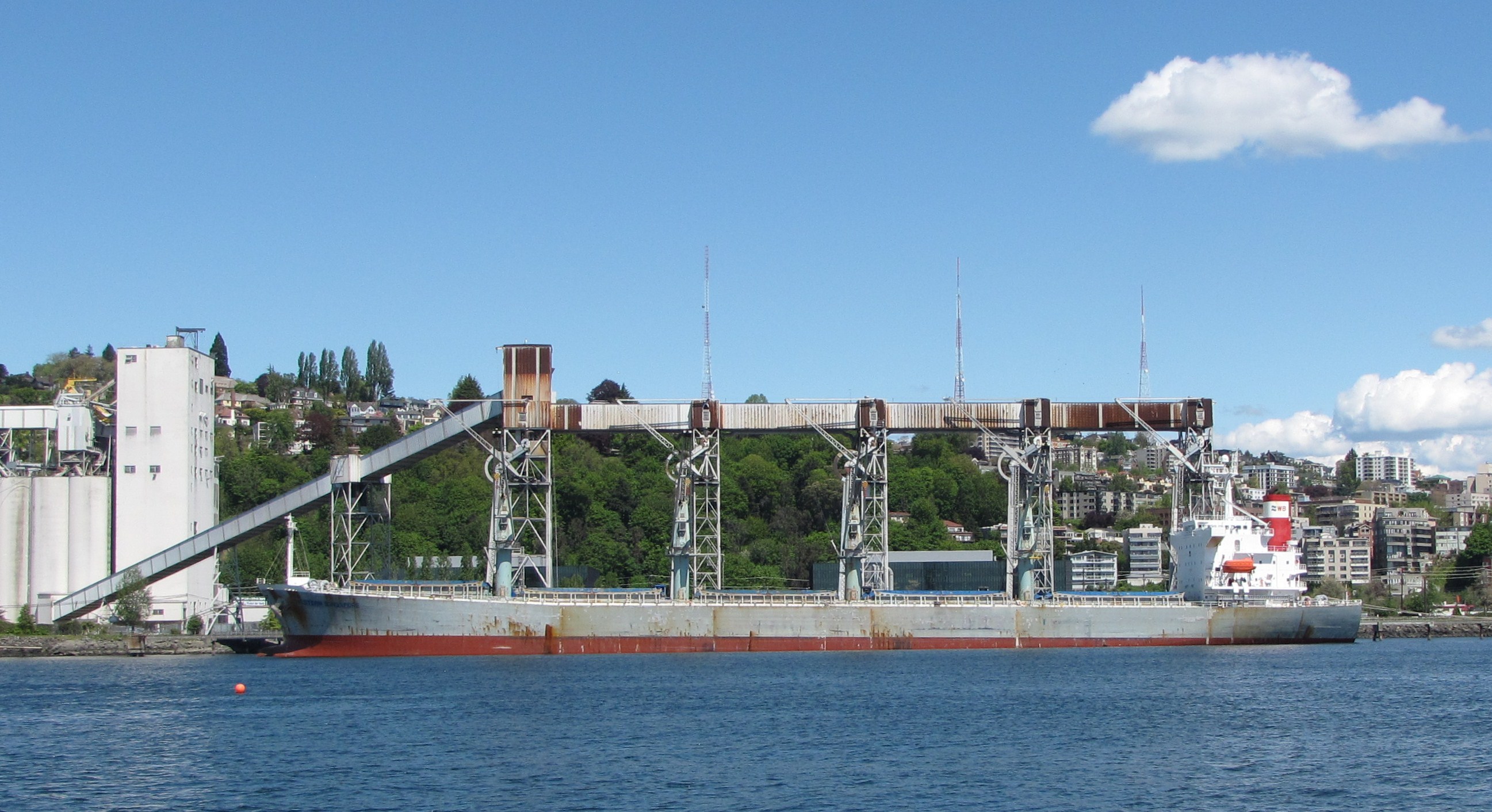
Archive photograph: bulk carrier alongside the Pier 86 grain terminal in Seattle. Photo: Greg Goebel / Wikimedia Commons, CC BY-SA 2.0. Original photograph retained without AI editing; the layout crops its display. The image remains under CC BY-SA 2.0. Illustrative only: not a GT shipment or evidence of a current disruption or any depicted operator's endorsement.