Archived analysis. Original briefing date: 2026-10-25. Archive edition published 20 November 2026. Facts, observations and forecasts relate to their stated dates, not current quotations or shipment approvals.
Key fact: The Council's 20 October announcement describes a provisional organic-farming agreement that includes temporary flexibility for non-organic protein feed for poultry and pigs. It also says formal adoption is still required. Council announcement
Archived analysis prepared for the 20 November 2026 publication edition. Original research reference date: 26 October 2026. The original briefing date was 25 October 2026; preparation was completed on the research reference date. Reporting reflects the dated sources, not a current quotation or shipment approval. Subsequent developments are identified in the status note below.
What the agreement changes for planning
Organic feed procurement has a new policy development to assess. On 20 October 2026, the Council presidency and European Parliament reached a provisional agreement covering organic production, labelling, certification and trade. The Council's 20 October announcement describes temporary flexibility for non-organic protein feed for poultry and pigs, with derogations to be phased out. It also sets out further endorsement and formal-adoption steps. The announcement is not, by itself, permission to change a feed specification or claim. Council announcement
The proposed feed flexibility is conditional, not a general allowance: the agreed text requires competent-authority confirmation of insufficient organic availability and sets further ingredient and use conditions. A conventional ingredient does not become organic through a permitted-use derogation. Provisional agreement text
Commercial interpretation for feed buyers
Treat the agreement as a reason to review the supply plan, not to rewrite an approved formula immediately. For each proposed ingredient change, identify the buyer's production system, animal category, ingredient identity and intended use. Ask the responsible compliance reviewer or control body which requirements apply, and keep that answer with the purchase record.
Separate the status of the ingredient from the status of its proposed use. An offer for a conventional protein ingredient should remain described as conventional. If a buyer believes a temporary allowance may permit its use in a particular organic production system, require the relevant conditions to be confirmed before accepting the order. Do not convert a possible derogation into a general organic-product claim.
For forward purchases, record the expected loading, import and use periods. Ask which legal dates matter for the transaction and whether any transition changes the answer. Avoid assuming that an order date alone determines eligibility. Where the final conditions remain unresolved, keep the purchase conditional or investigate a separately qualified alternative rather than presenting the supply as fully approved.
Check the operator and the product
The European Commission explains that farmers, processors and traders must undergo checks by a control body or authority before marketing products as organic. Compliant operators receive a certificate. This gives procurement a useful starting point, but the certificate still needs to be matched to the party and activity involved in the proposed purchase. Commission control guidance
Request a current certificate and check the legal entity, covered activities, product scope and relevant validity information. Compare those details with the seller, processor and other parties named in the transaction. If the trading company differs from the processing site, ask how each role is covered rather than assuming one certificate answers every question.
Keep certification review separate from nutritional assessment. Obtain the agreed technical specification and representative analysis, then establish what evidence will accompany the actual lot. A material that meets the protein target is not automatically suitable for the customer's certified production system. Equally, an organic claim does not remove the need to assess composition, handling or the intended application.
Build the import file before dispatch
The Commission's organic-trade guidance states that imported organic products require an appropriate electronic certificate of inspection, administered through TRACES. It also explains that import arrangements depend on origin and that recognition can be limited to particular product categories. A country name alone therefore cannot establish that every offered ingredient follows the same import route. Commission organic-trade guidance
For a proposed import, identify the product category, country of origin, control body and responsible importer early. Ask the compliance reviewer to confirm the applicable route and any additional requirements for that combination. Assign responsibility for preparing and checking the shipment documentation before the container is loaded.
Use a single shipment reference to reconcile the commercial invoice, packing list, transport document and inspection certificate. Investigate differences in operator names, lot references, product descriptions or quantities. Keep corrections traceable to the issuing party instead of silently normalising inconsistent documents in the purchasing register.
Keep transition decisions visible
Give every open organic purchase a short status: approved under confirmed requirements, awaiting clarification, or being assessed as an alternative. Record the specific missing answer, its owner and the next decision date. Keep a pending legal interpretation out of the same category as a missing freight quotation, since they require different reviewers and actions.
For customer communication, describe what is actually established. State the offered product's documented status, the evidence available and any condition still awaiting approval. Do not promise that the political agreement will automatically broaden access, remove paperwork or make an unqualified ingredient acceptable.
The practical next step is a focused review of purchases that could cross a regulatory transition. Confirm the applicable conditions with the responsible reviewer, qualify alternatives where needed and preserve the decision trail. That turns a policy announcement into a workable supply plan without confusing commercial opportunity with permission to ship or use a particular lot.
Status at 20 November 2026
Status checked 20 November 2026: Parliament's procedure record shows committee approval of the negotiated text on 4 November and a plenary vote scheduled for 24 November. Formal adoption and entry into force have not been established here. The Council added the agreed text on 28 October; its page now records a 29 October review. Do not use this agreement as a new shipment or formulation permission. Parliament procedure record, Council announcement
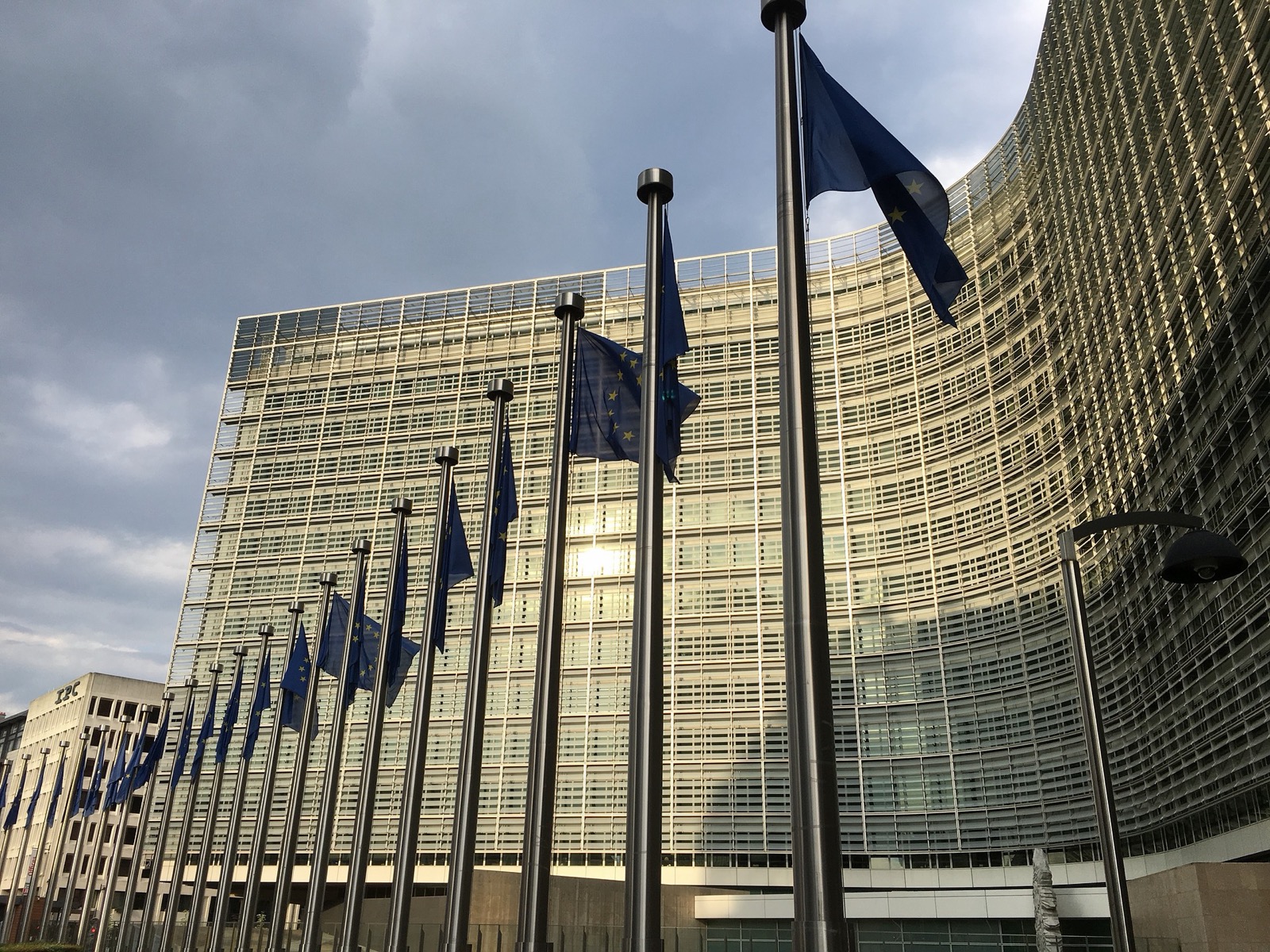
Archive photograph: Berlaymont building, Brussels, 7 May 2016. Photo: almathias / Wikimedia Commons, CC0. Resized only; not a photograph of the November dialogue.