Archived analysis. Original briefing date: 2026-10-21. Archive edition published 20 November 2026. Facts, observations and forecasts relate to their stated dates, not current quotations or shipment approvals.
Key fact: Peru's resolution was signed on 19 October and published on 20 October 2026. The original text authorised exploratory fishing for white anchovy, or samasa, with a start linked to publication of the participating-vessel list rather than the resolution date alone. Official resolution
Archived analysis prepared for the 20 November 2026 publication edition. Original research reference date: 22 October 2026. The original briefing date was 21 October 2026; preparation was completed on the research reference date. Reporting reflects the dated sources, not a current quotation or shipment approval. Subsequent developments are identified in the status note below.
What Peru has authorised
In October 2026, Peru authorised its marine research institute, IMARPE, to conduct exploratory fishing for white anchovy, also called samasa, under Resolution 00363-2026-PRODUCE. The instrument is dated 19 October 2026 and was published in the official gazette on 20 October. It identifies the resource as Anchoa nasus and places the operation outside five nautical miles from the coast. Official resolution
The original October programme provided for up to 15 calendar days, beginning at midnight following publication of the participating-vessel list; that duration was amended on 6 November, as noted below. IMARPE monitors the activity, and conservation concerns can lead to suspension or closure. The state news agency's 20 October account confirms that the purpose is to evaluate the resource's distribution, availability and biological characteristics. Andina official reporting
The resolution also cites an acoustic biomass estimate of 242,602 tonnes from a survey conducted between 15 September and 7 October. That figure describes the surveyed resource, not a finished fishmeal allocation. Official resolution
Commercial interpretation for marine ingredient buyers
For GT Nutritions, the buying implication is to separate four stages: research permission, documented catch, processed product and a confirmed commercial offer. This is a procurement interpretation, not a forecast of production, shipment volumes or prices.
Treat the announcement as a reason to ask more precise sourcing questions. Do not count prospective material as purchase cover merely because exploration is authorised. Where a seller refers to this development, ask which stage its offer has reached and what evidence supports the stated quantity and delivery window.
Identify the species behind the offer
Ask for the scientific name and declared raw-material composition, not only a broad description such as anchovy meal or marine protein. If material from several sources is combined, request the supplier's description of that composition and the way it is recorded for the offered lot.
Keep the new source identity separate from an existing product approval. Have the technical team decide whether the documentation and analysis are sufficient for the intended formulation. A familiar commercial description should not replace a review of the actual material. Equally, a different species name should prompt a specific assessment rather than an unsupported assumption about inferior or equivalent performance.
Follow the material through processing
FAO's 2023 guidance on end-to-end fisheries and aquaculture traceability describes critical tracking events and key data elements across the value chain. It provides a framework for connecting product identity and movement, rather than treating isolated documents as a complete history. FAO traceability guidance
For a proposed purchase, request the relevant vessel and fishing-authorisation references, landing information, processing establishment and production-lot identifier. Ask the supplier how it connects incoming raw material with the finished quantity offered. Where the chain includes aggregation or blending, identify which records preserve that connection.
Do not confuse a research authorisation with certification of a finished product. Confirm the applicable processing, export and destination requirements through the responsible parties. Keep any claimed sustainability certification separate, and verify that its scope covers the actual product and source before repeating it to a customer.
Buy against the finished specification
Request a current specification and representative certificate of analysis for the material being proposed. Have the formulation and quality teams identify the relevant acceptance criteria, analytical basis and sampling arrangements. Where oil is offered, review it as a separate product with its own specification rather than assuming that a meal approval also covers the lipid fraction.
Do not translate a biomass estimate into purchasable meal or oil using an undocumented conversion factor. Ask instead for the finished volume, its production status, the allocation available to the buyer and the evidence needed before release. If these details are not yet known, retain the enquiry as a potential source rather than an agreed shipment.
Keep the delivery commitment conditional on evidence
Before confirming an arrival plan, ask for the loading point, available dispatch period, packaging, commercial basis and document responsibilities. Distinguish material already produced from an offer dependent on future catches or processing. Record which conditions remain open and when the supplier must resolve them.
For existing purchasing programmes, retain approved cover while the new source is evaluated. An alternative should enter the firm plan only when its technical suitability, legal position and executable commercial terms are established. If a trial-related supply claim changes, update the customer with the verified consequence for its order, not the headline alone.
The opportunity is to improve source knowledge without overstating availability. A tightly defined enquiry can prepare buyers to evaluate future material while preserving the distinction between a scientific investigation and feed ingredients ready to contract and ship.
Status at 20 November 2026
Update checked 20 November 2026: Resolution 00394-2026-PRODUCE, published on 6 November, replaced the original 15-day limit with continuation until the catch limit estimated by IMARPE is reached, subject to conservation controls and official conclusion. Its recitals report 2479 tonnes landed by 1 November. Those landings do not establish finished feed-ingredient availability; the amendment alone does not confirm that fishing remains open today. November amendment
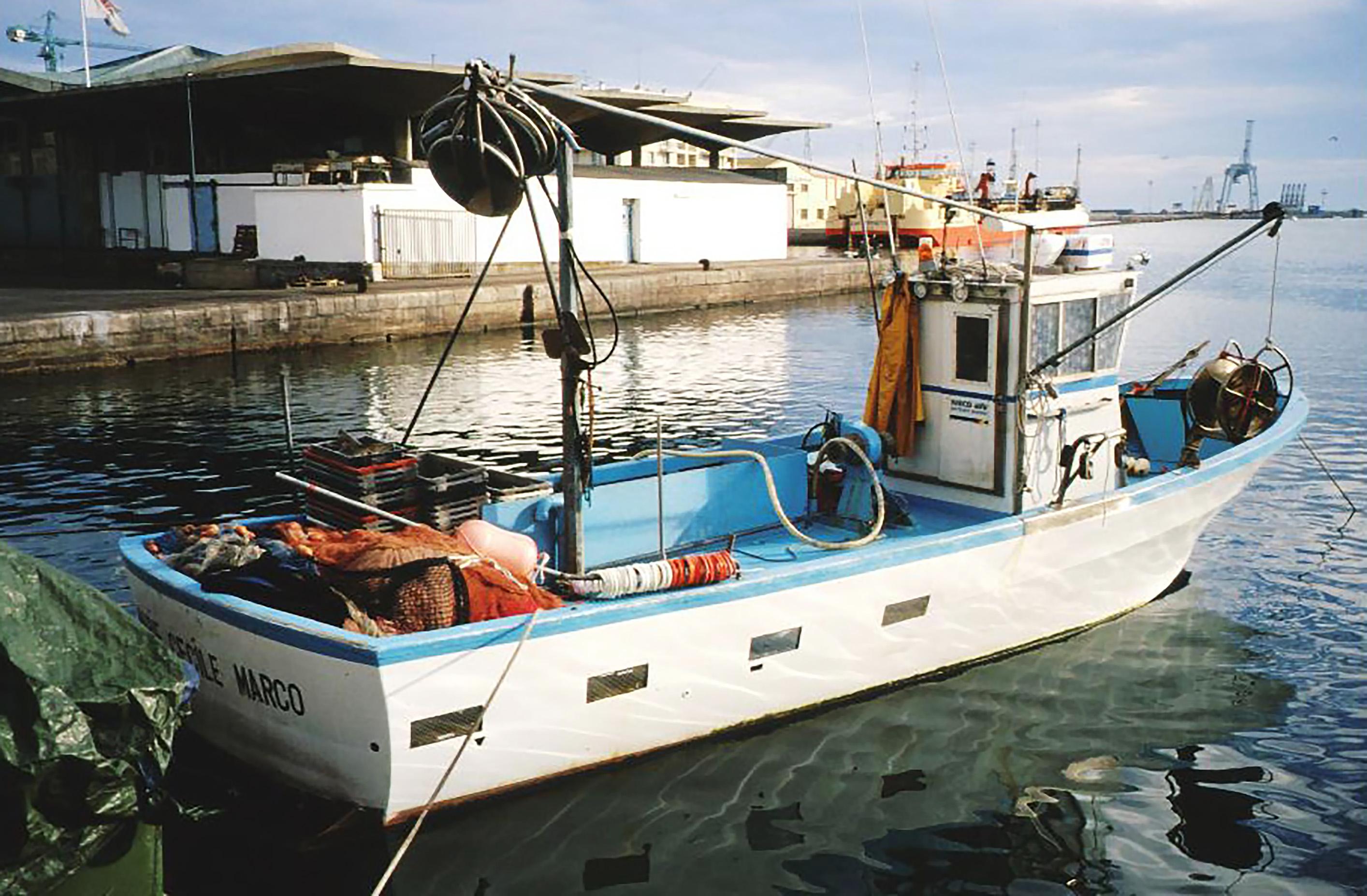
Archive photograph: a Mediterranean purse seiner. Photo: Alain Guillou and Isabelle Cheret / Ifremer, via Wikimedia Commons, CC BY 4.0. Original photograph unchanged; CSS display crop only, no AI editing. Illustrative only: not a GT supplier, a Peru or Baltic consignment, or evidence of a current fishing authorisation or endorsement.