Key fact: EFPRA's 28 October position sets out three requests: wider use of ruminant processed animal proteins, a review of intra-species recycling restrictions, and permission for Category 2 meat-and-bone-meal exports for feed. These are industry recommendations, not permissions created by the position paper. EFPRA position.
A circular protein debate with immediate buying relevance
Europe's discussion about protein security is also a discussion about how animal by-products can be used. In a position published on 28 October, the European Fat Processors and Renderers Association, EFPRA, called for changes to the restrictions governing rendered proteins. It seeks broader uses for ruminant processed animal proteins, a review of intra-species recycling rules and authorisation of Category 2 meat-and-bone-meal exports for feed. These are the association's requests to regulators. They should not be read as an announcement that the requested routes have opened. EFPRA position.
The policy context is substantial. The Commission's Protein Action Plan aims to increase the EU-sourced share of protein from oilseeds and protein crops used as animal feed from 25.8% to 35% by 2035. That is a specific plant-protein objective, not a target covering every animal-feed ingredient. Commission Protein Action Plan overview.
Category and species answer different questions
The Commission distinguishes three animal-by-product categories by risk and identifies Category 3 as the category used for feed for food-producing animals, subject to safeguards. It also explains that permitted treatment and use depend on the material's source and intended purpose. Category is therefore an essential part of product identity, not a complete purchasing decision. Commission animal-by-products overview.
The 2021 feed-ban amendment illustrates the separate species question. It introduced conditional provisions for porcine processed animal protein in poultry feed and poultry processed animal protein in pig feed, alongside specific production and handling conditions. This was a defined change, not a blanket release of all animal proteins for all livestock. Regulation (EU) 2021/1372.
Commercial interpretation for procurement teams
The following is GT Nutritions' purchasing recommendation, not a prediction of regulatory reform or a shipment-specific legal determination.
Keep two separate opportunity lists. The first should contain products and routes for which the current compliance review is complete. The second should contain possibilities dependent on a future change. Record the proposed change, the evidence still required and the person responsible for monitoring it. Do not let a speculative opportunity become an unconditional sales commitment because a headline describes the underlying material as available.
For a customer requesting a new application, start with the intended species and destination. Then identify the exact ingredient and proposed use. That order encourages a meaningful compliance question rather than an exchange of generic certificates that do not resolve whether the customer's formulation can use the material.
Replace broad descriptions with a product identity
Ask for the declared source species, material category, processing establishment and product specification. Keep these details separate from the commercial shorthand used in an enquiry. A description such as animal protein, protein meal or meat-and-bone meal should trigger clarification if it leaves the actual material ambiguous.
Treat a change of source, processing site or species declaration as a reason to reopen the review. A familiar protein percentage does not establish that a replacement offer has the same regulatory profile as the previous purchase. Preserve the original declaration and the revised version so the commercial and quality teams can see what changed.
Do not merge feed and other end uses
A material's suitability for one market or purpose should not be carried into another without checking. In particular, keep feed enquiries distinct from fertiliser and other non-feed enquiries. The Commission's overview discusses different uses for the different material categories; those distinctions should remain visible in commercial records. Commission animal-by-products overview.
For an export proposal, ask the compliance team to check both the origin-side rules and the destination requirements for the actual product. Customer willingness to buy is not a substitute for that review. Neither should an industry request to change export rules be treated as evidence that an export certificate can already be issued.
Prepare evidence before promising volume
Where a route is currently usable, build a concise evidence file linking the quotation to the specification, establishment details, species declaration and applicable documentation. Ask which handling controls and supporting records are needed for the particular movement. Resolve those questions before booking transport rather than leaving them to the loading day.
For a route dependent on reform, preparation can still be productive. Discuss indicative requirements, packaging and possible qualification work, while clearly recording the regulatory dependency. Avoid promising shipment dates, approved destinations or guaranteed substitution benefits that the available evidence does not support.
Keep the commercial decision current
When an official measure is eventually published, compare its actual scope, effective date and conditions with the opportunity file. Check whether it changes the product, species, processing or documentation requirements relevant to the proposed deal. Only then move the opportunity into the executable purchasing list.
Rendered proteins deserve a precise commercial discussion: what the material is, where it can go and what evidence supports that route. Keeping policy ambition separate from present permission allows buyers to prepare for change without building today's contracts on tomorrow's assumptions.
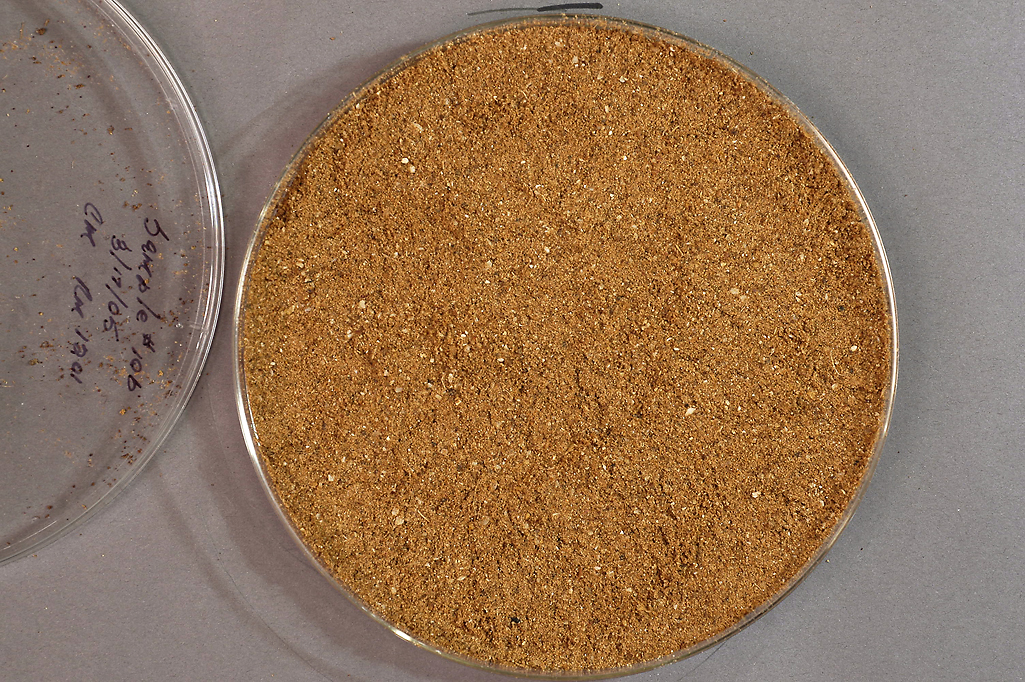
Archive photograph of meat-and-bone meal. Source: USDA Agricultural Research Service via Wikimedia Commons (public domain). Original photograph retained without AI editing; the layout crops its display. For illustration only: not a GT product or certified lot. Species, material category and regulatory eligibility are not established by this photograph.