Archived analysis. Original briefing date: 2026-11-06. Archive edition published 20 November 2026. Facts, observations and forecasts relate to their stated dates, not current quotations or shipment approvals.
Key fact: AHDB's 5 November update puts UK pigmeat production in July-September 2026 at 246,600 tonnes: down 1.6% from the previous quarter but up 2.8% from a year earlier. These are meat-production figures, not rendered-protein tonnages. AHDB production update
Archived analysis prepared for the 20 November 2026 publication edition. Original research reference date: 6 November 2026. Reporting reflects the dated sources, not a current quotation or shipment approval. Subsequent developments are identified in the status note below.
Slower growth is different from a year-on-year contraction
UK pig-production figures now offer a more measured signal for winter sourcing. AHDB's analysis, published on 5 November, reports third-quarter pigmeat output of 246,600 tonnes. That was 1.6% below the second quarter but 2.8% above the same quarter of 2025. The quarterly easing and annual growth describe different comparisons, not contradictory results. AHDB's Q3 analysis
For procurement, the distinction matters. A headline about slower growth is not enough to declare either a shortage or a surplus of animal-protein ingredients. The useful next step is to ask which sources, production periods and uncommitted quantities support the offers currently being considered.
Read the measurement before drawing a supply conclusion
AHDB's Q3 analysis used Defra data through September; Defra's release history records that update on 15 October. The linked Defra landing page is rolling and now also lists the 12 November update through October; that later notice records a 17 November revision to Scottish October data. Its slaughter tables concern livestock killed for human consumption in UK abattoirs, while its production tables report meat output. Defra also cautions that monthly slaughter totals are affected by the number of days in the survey period and provides weekly averages to help interpret trends. Defra slaughter and production statistics
These definitions do not provide a conversion factor from a tonne of meat into a tonne of saleable porcine meal. In a purchasing assessment, keep the national throughput indicator separate from the processor's actual product, allocation and loading commitment. Do not manufacture an ingredient-volume estimate by applying an assumed rendering yield to the headline total.
Processing and intended use remain separate questions
The European rendering association EFPRA describes processed animal proteins as products made from Category 3 animal by-products and identifies livestock feed, aquafeed and pet food among their European uses. This is technical context for the ingredient family, not evidence that a particular UK lot is available or eligible for every destination. EFPRA: processed animal proteins
For Great Britain specifically, official pet-food guidance requires approved or registered suppliers and transporters and distinguishes permitted materials from prohibited ones. It also states that processed-animal-protein use is controlled by TSE regulations. That guidance applies to England, Scotland and Wales; it is not a substitute for checking another destination's requirements. Defra and APHA pet-food guidance
The commercial implication is to review source identity and intended application together. A species description, a risk category and a protein percentage answer different questions. None should stand in for a complete review of the selected supply route.
Commercial interpretation: ask what is genuinely uncommitted
Ask a prospective source to distinguish material already produced and released from future production and provisional allocations. Request the delivery period, quantity tolerance, packing format and date on which the offer must be reconfirmed. Keep the answer tied to the product being quoted rather than a broad statement about slaughter activity.
For a hypothetical December requirement, an offer backed by an identified released lot should be recorded differently from one dependent on a later production run. Both may be worth evaluating, but the second needs a clear confirmation milestone. A national quarterly figure cannot reserve either shipment.
Commercial interpretation: preserve species and specification controls
If an alternative is proposed, ask whether it remains porcine-only or changes the declared species composition. Record the proposed specification alongside the original: protein, fat, ash, moisture, analytical basis, relevant quality controls and the required lot evidence. Send differences to the customer's technical reviewer before accepting a replacement.
A poultry ingredient or a broader processed-animal-protein profile should not become a silent substitute for a porcine product. Keep customer restrictions, intended use and destination review attached to the alternative. Compare offers only after the technical and commercial differences are visible; a similar protein number does not settle the purchasing decision.
Commercial interpretation: make forward planning evidence-led
Build a short source review covering the next required deliveries. Ask each source whether its confirmed production plan or allocation has changed, when the next decision is due, and which documents will support release. Retain the previous offer so that any revision can be traced to a specific change.
Keep the quarterly production comparison as market context, not as a price forecast. If a seller cites it to explain a revised offer, ask which part of that offer has changed and obtain the supporting commercial detail. This turns a general market discussion into a decision the buyer can evaluate.
The practical response to the new figures is a better forward supply check: confirm the actual ingredient, distinguish released stock from planned output, and identify the evidence needed before each delivery is committed.
Status at 20 November 2026
Status checked 20 November 2026: Defra published a subsequent monthly update through October on 12 November; that notice records a 17 November revision to Scottish October data. The Q3 comparisons retained here are the figures in AHDB's 5 November analysis, not a current processor allocation or rendered-protein supply estimate. The historical September notice was not independently recovered from the redirecting link. Defra October notice, AHDB Q3 analysis
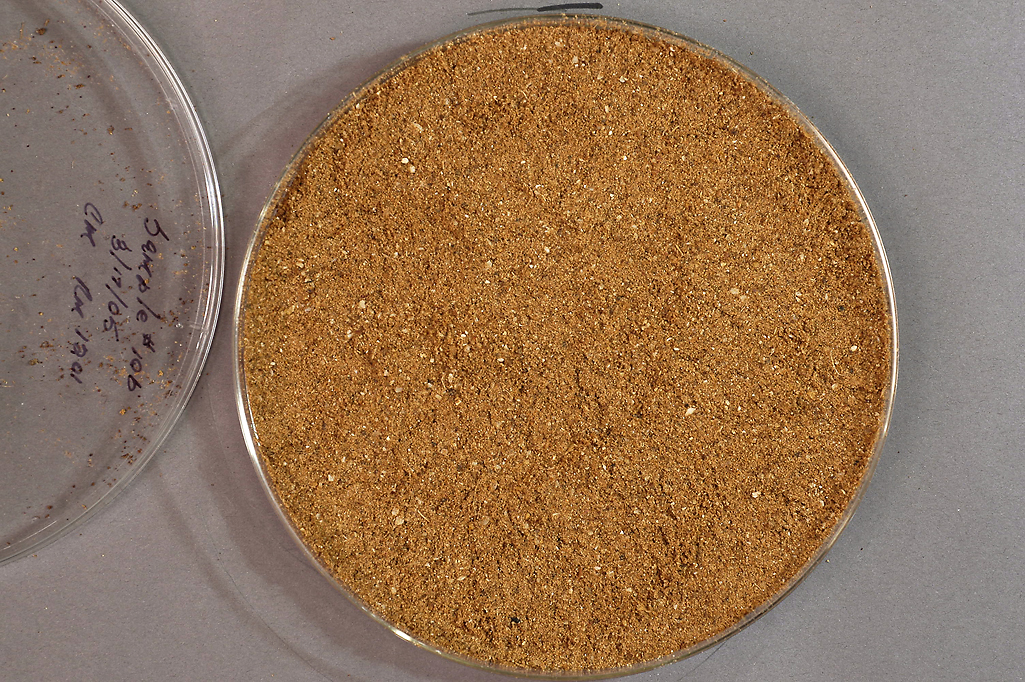
Archive photograph of meat-and-bone meal. Source: USDA Agricultural Research Service via Wikimedia Commons (public domain). Original photograph retained without AI editing; the layout crops its display. For illustration only: not a GT product or certified lot. Species, material category and regulatory eligibility are not established by this photograph.