Research reference date: 15 November 2026. Published 20 November 2026. Market observations refer to the periods identified below, not a current quotation or consignment approval.
Key fact: The U.S. notice published on 10 November extends the suspension of the specified maritime actions through 11:59 p.m. Eastern Time on 9 January 2027. This is a temporary suspension, not permanent repeal. USTR final notice.
What changed this week
A U.S. trade-policy decision gives feed buyers a reason to revisit early-2027 booking terms. The final notice, published on 10 November and effective from 9 November, extends the suspension of actions in the investigation into China's maritime, logistics and shipbuilding practices. It says the specified maritime-service fees do not accrue during the suspension. USTR will consider whether to continue the pause or take further action before the January deadline. USTR final notice.
The earlier document published on 26 October was a request for comments on a proposed extension. It should not be confused with the subsequent final decision. Keeping both publication date and legal status visible helps prevent a purchasing file from relying on an outdated proposal. USTR consultation notice.
USDA included the extension in its 12 November Grain Transportation Report, placing the development directly within agricultural freight monitoring. That does not make the notice a quotation for any particular feed ingredient or route. USDA report, page 2.
Commercial interpretation: establish exposure first
The recommendations below are GT Nutritions' commercial interpretation, not a ruling on an individual shipment or a forecast of freight prices. A temporary policy pause is a prompt for questions, not a reason to assume that all ocean transport becomes cheaper.
Begin with the proposed movement. Ask the forwarder to identify the loading port, discharge port, transshipment arrangements and the service being quoted. Where relevant, request written confirmation of how the measures relate to the proposed vessel and voyage. Do not infer exposure merely from the ingredient's origin, the supplier's nationality or a carrier's brand name.
For a movement outside the relevant U.S. port activity, ask what specific connection justifies any related charge. An indirect network-cost explanation and a shipment-specific statutory fee are different propositions. Have the service provider identify which it means, rather than allowing a broad policy label to settle the commercial discussion.
Separate a public fee from a commercial surcharge
Ask for the precise description of any maritime-policy surcharge in an offer. Is it a separately identified public charge, a carrier's commercial surcharge or an estimated contingency? Request the supporting basis and the period covered. Avoid approving a vague additional amount simply because its label resembles a recent announcement.
Equally, do not promise a saving to a customer before receiving a revised offer. Ask whether a quoted amount has actually changed, whether it was included in the original rate and whether the refreshed quotation replaces the earlier version. Record the answer against the booking rather than relying on a general market headline.
For a feed shipment, retain the material specification and agreed loading basis alongside this freight clarification. A revised logistics assumption should not quietly change the commercial quantity or product approval attached to the order.
Give January shipments a clear decision point
Use the stated suspension deadline as a review trigger, not an assumption about what happens next. Ask the forwarder which event would determine the treatment of the actual movement under the rules then in force. Do not assume that the quotation date, booking date, loading date and port-call date are interchangeable.
For an offer extending beyond the current policy window, request clear change provisions. Who must notify the buyer? What evidence must support a new charge? Can the buyer review an alternative sailing or route before incurring extra cost? These are proposed negotiating questions, not terms automatically supplied by the notice.
Name an internal owner for the review and place it before the commercial commitment becomes difficult to change. Keep the accepted quotation, the policy reference and the forwarder's written explanation together. The objective is a decision that can be reconstructed later, not a calendar reminder without responsibility.
If an alternative routing is proposed, assess it as a complete operational option. Ask whether it changes the delivery window, document instructions or receiving arrangements. Do not accept a different route solely to remove one uncertain cost line while leaving its timing and handling consequences unexamined.
Keep contingency costs out of confirmed actuals
In the deal register, distinguish an accepted freight amount from a provisional allowance. Show what evidence would replace the allowance and who needs to approve the update. If a later invoice includes a new policy-related line, reconcile it against the agreed terms before treating it as an approved shipment cost.
Give the customer a short, bounded explanation: what is confirmed, what remains conditional and when the next check will occur. Avoid describing a temporary pause as permanent certainty. The useful procurement response is a documented allocation of responsibility, with a route-specific check before commitment and a final reconciliation after invoicing.
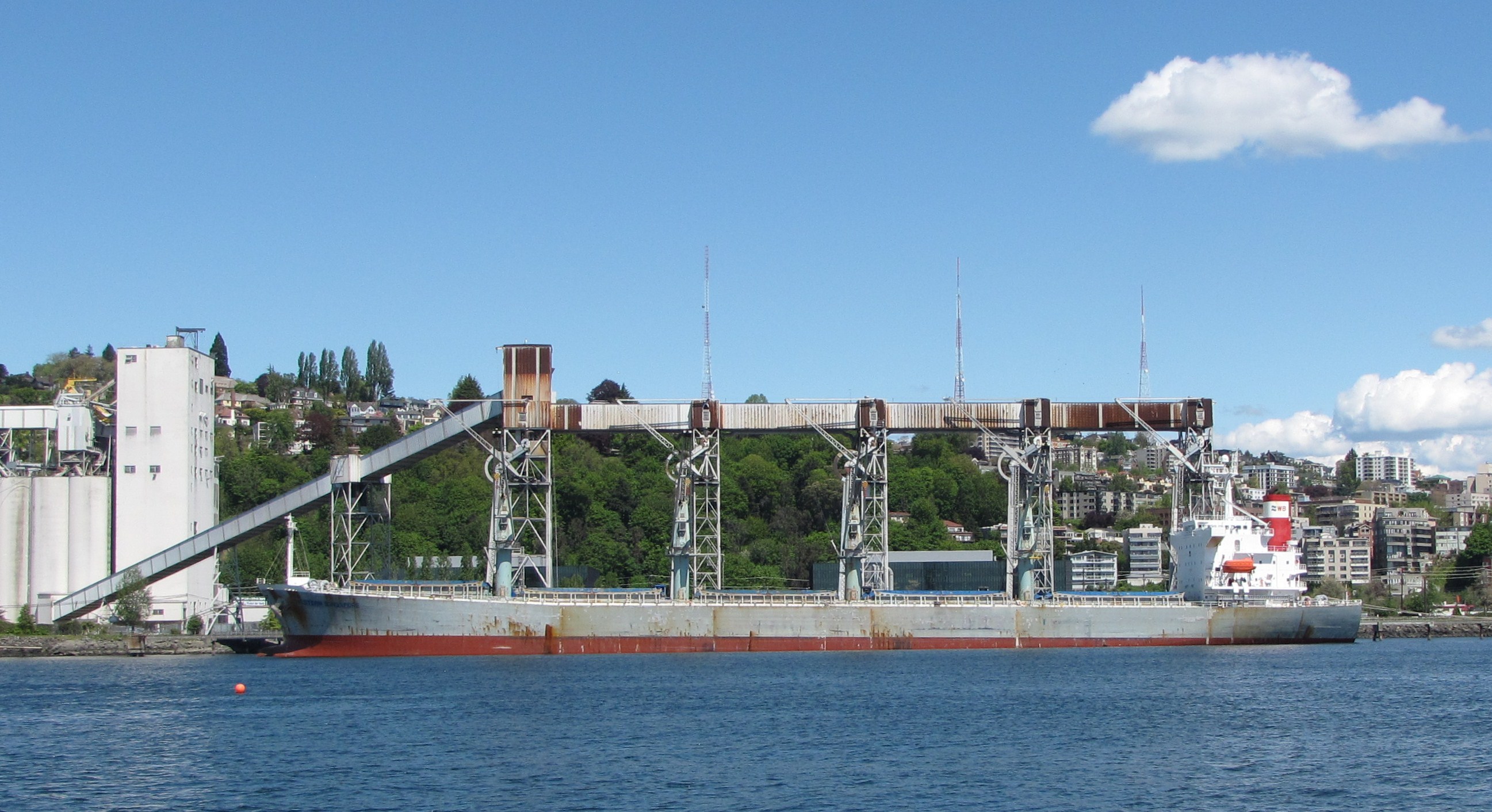
Archive photograph: bulk carrier alongside the Pier 86 grain terminal in Seattle. Photo: Greg Goebel / Wikimedia Commons, CC BY-SA 2.0. Original photograph retained without AI editing; the layout crops its display. The image remains under CC BY-SA 2.0. Illustrative only: not a GT shipment or evidence of a current disruption or any depicted operator's endorsement.